The animals of Bean Farm have long told stories about the Ignormus in the Big Woods. No one, admittedly, is quite sure what an Ignormus is, other than a large, terrifying creature that can eat any animal, who may have caused the disappearance of a rabbit or two. But when things begin to disappear from the Bean Farm—including carefully horded food supplies that the animals and Mr. Bean desperately need for the summer—followed by a series of threatening letters from the Ignoramus itself, the stories turn to pure terror. Worse, some suspicion is even falling on Freddy himself. Freddy!
It all leads to Freddy and the Ignormus, a book that, while still funny and filled with crisp dialogue, has a surprisingly somber tone—and an urgent discussion of fear, courage, reality and belief, overshadowed with the terror of war.


Up until this point, the Freddy books have been — what is the word I’m looking for? — fluffy. Oh, certainly, author Walter Brooks had not hesitated to satirize various features of American culture: political speeches, courtroom trials, and capitalism, casting gentle zingers at venerable institutions. But for the most part, the books remained lighthearted romps.
Well, this did surprise Dr. Murdock, for he had never found a rooster in any of his patients before.
Temporarily at a loss for more adventures that could feature a talking pig on an upstate New York farm, for his next novel, author Walter Brooks turned to a different sort of story — the tale of traveling circus animals, where Freddy the Pig only makes an appearance in the final chapters. Originally titled
All is, I’m sorry to say, not quite right on the Bean Farm, that home of the loveable animals Freddy the Pig, Jinx the Cat, Charles and Henrietta the chickens, and some rather less loveable rats. (Rats.) A toy train has disappeared. Grain is vanishing. And two Terrible Robbers have arrived in the area, leaving the human sheriff and detective quite at a loss.
As it turns out, the problem with spending a delightful winter in Florida and finding a sack of gold in the bargain is that you get terribly bored afterwards. At least, you do if you are a clever pig, a cat, a good tempered cow, a rather less good tempered crow, a talkative rooster, or any of a number of other farm animals at Bean’s Farm in upstate New York, desperate for something to do.
Psst. The goblins are calling.
During and shortly after the
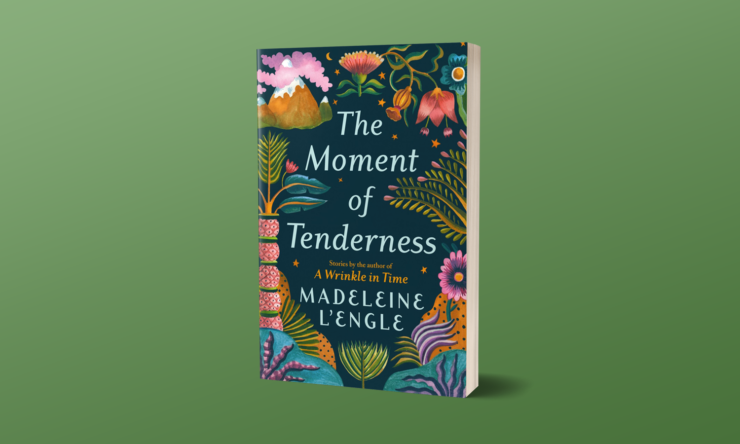
In 2008, after the death of Madeleine L’Engle, her granddaughters agreed to publish 
In 1994, Madeleine L’Engle turned to Vicky Austin again to write the last book in her Austin series, 
After years of relegating them to mere supporting characters, L’Engle finally gave Sandy and Dennys, the Murry twins their own adventure in
Before I go on to discuss this week’s book, A House Like a Lotus, a quick point about the Madeleine L’Engle reread in regards to racism, homophobia and other issues.

Perhaps dissatisfied with the novels she had written about the children of Meg and Calvin O’Keefe, in 1978 L’Engle again turned to the Murry family for another novel featuring dazzling trips through time and space, this time on the back of a unicorn. 
Some years after writing