























John was born with powers and abilities far beyond those of mortal men, and he often wondered why. But as a boy, it was simply wonderful to have those abilities. He could lift his father’s tractor overhead before he learned to read. He could outrace a galloping horse. He couldn’t be cut or bruised or burned. He could fly.
But his life was not a trading card with a heroic-looking photograph on one side and a convenient list of his abilities on the other. He had to discover himself for himself. It took him years to realize he could fire laser beams from his eyes. That he could force his lungs to expel nearly frozen carbon dioxide. And it wasn’t until his mid-thirties that he realized he’d probably stopped aging biologically somewhere around the age of twenty-two.
His parents weren’t perfect people. His mother drank, and when she did, she got mean. His father had affairs. But when they understood that the baby they’d found abandoned on the edge of their farm wasn’t like other children—was probably, in fact, unlike any other child who’d ever been born—they cleaned up their acts as best they could. They taught themselves to be better people, and then they conveyed those hard-won lessons to their son. They were as good as they could be. When they died while John was away at college, he decided if he could be half as wise, as kind, as generous as they were, then he could be proud of himself.
Driving back to the city after his parents’ funeral, he began his career. There was a commuter train derailment, a bad one, with a fully occupied car dangling off the Utopia Street Bridge, sixty feet above the Tomorrow River. John got out of his car and left it behind on the clogged highway. Fully visible in bright daylight, he leaped into the sky, and moments later, he had the train car resting safely on the bridge. He freed passengers from twisted metal. He flew those who needed immediate emergency care to the hospital, and then he returned to the scene of the accident. He thought it might be necessary to file a report of some kind with the police. With dozens of cameras pointed at him, microphones and tape recorders shoved in his face, questions being barked at him as if he’d done something wrong, he felt like he might suffocate. He wished he could turn and walk back to his car and drive to his dorm, maybe go out for beers with his friends. But he knew he’d never be able to do that now. He’d chosen otherwise.
He coughed nervously. The questions stopped. Everyone was quiet. Everyone was waiting. “I’m John,” he said. “I’m here to help.”
And for the next sixty years, that was just what he did.
It was the least significant period of his life.
* * *
John had an enemy.
Actually, he had many enemies, from the flamboyant nuts who were simply desperate for his attention, to the well-funded organizations who felt John threatened their political, financial, or ideological interests. But there was one man who devoted his entire life to vexing John. He called himself Teeter-Totter, of all the goofy things, and he wore an outfit not dissimilar to the jumpsuit John wore, made of a flexible composite material that could withstand the wear and tear of everyday battles and rescues and adventures. Teeter-Totter had no powers. John found that out when he punched him while foiling a bank robbery attempt and broke Teeter-Totter’s jaw, fractured his eye socket, cracked four ribs and punctured his lung.
”See?” Teeter-Totter said, once paramedics reinflated his lung. “I don’t need freaky powers to take you on.”
John felt just sick about the whole incident.
Their relationship, such as it was, got worse. Teeter-Totter graduated beyond bank jobs and jewelry heists and began committing acts that were downright heinous. He burned Yosemite. He brought down skyscrapers. He drove a robot-controlled truck into Hoover Dam. And he made John feel responsible for all of it.
”What did I ever do to you?” John asked after Teeter-Totter successfully set off a massive genome-bomb in the Midwest. There would be a catastrophic crop failure that year, and not even John would be able to prevent starvation. “Really, I have to know. What did I ever do to you?”
”You exist,” Teeter-Totter said, as if the answer were so obvious he couldn’t believe John had asked. “And if it weren’t for me, you’d exist without limits. Jesus, didn’t you ever wonder why I call myself Teeter-Totter? It’s so you can be up only so long as I stay down, and that when you’re down, someone else is sure to be up. Hello? Is any of this getting through?”
”I’ll win,” John said.
”Oh, you think so?”
”Yes. It doesn’t make me happy, but I know so. In the end, I’ll win.”
Forty years later, John felt he was proven right when Teeter-Totter died of old age. But then he realized something. Teeter-Totter wouldn’t have done any of those things had John never been born. John wasn’t merely the motivation for Teeter-Totter’s crimes. He was the reason for them, as much as if he’d committed them himself. If his every act of heroism was countered by an act of evil, then how were the two any different?
John gave Teeter-Totter a respectful burial. “Congratulations,” he said over the grave. “You won after all.”
After that, John still helped people whenever things happened right in front of him, but he stopped seeking trouble out.
* * *
John quite naturally wondered how he’d come to be. He knew he’d been abandoned near his adopted parents’ farm, but he’d never found out why or by whom. He reasoned that he might be an alien. He’d even worked out a scenario: He’d been sent to Earth as an infant by his home planet’s science council, who had calculated that, free from Zethon’s heavy gravity (Zethon being the name he’d given his home planet) and free from the influence of the exotic star the planet orbited, the Zethonian baby would possess amazing abilities. Without a doubt the orphan would rule Earth before he reached puberty, and then go on to conquer the surrounding space sector, the quadrant, and at least half the Milky Way galaxy.
What the council didn’t count on was John’s parents.
After Teeter-Totter died, John began flirting with space. He knew he would never find Zethon, because he didn’t believe imagining something made it so, and he wasn’t crazy. He was merely lonely. He hoped he might find someone like himself out there. But since he had never flown outside Earth’s atmosphere, he had no idea if he could survive away from Earth.
”Trying not to die ain’t the same thing as living,” his mother used to say. So he launched himself straight up until he saw the planet bend in a sharper curve than he’d ever seen before, until blue sky faded to black, until he was no longer going up but out, away from Earth for the first time.
It turned out he could do quite well in space.
It was like being a small child again. Everything was vast and scary, and he exulted in it. He floated respectfully over the lunar surface, not wanting to add his footprints to those of the astronauts who’d come before. They’d been his childhood heroes. He climbed Olympus Mons. He showered in the sulfur geysers of Io. He let himself go limp and be battered about inside the Great Red Spot of Jupiter. It was an amazing ride.
He spent years away from Earth and learned there wasn’t an environment he couldn’t survive. No amount of gravity or kind of radiation or absence of it could harm him. He learned to fly faster than the speed of light, and he explored. For a while he named every new planet he discovered. He named one for each of the astronauts. He named them for school teachers he’d liked. He named one for a magazine writer he’d dated. He named a pair of moons for his parents, and he named a spectacular ringed gas giant for Teeter-Totter.
In all the places he traveled to he found no one like himself. The closest he came to encountering intelligent life was on a small, rocky world where he came upon what someone had left behind. They—whoever they were—had worked out the mathematics to predict the position of every particle coming from Earth out to sixty-two light years. They had made a copy of each and every one of those particles and reassembled them into coherent signals, which they filtered out to leave only television broadcasts from 1956 to 1977. These broadcasts were played in a decades-long loop on a screen the size of Yosemite’s Half Dome.
John watched the broadcast loop several times but never figured out what the point was. Eventually he went home.
* * *
Things had gotten bad and strange in his absence.
Resources were scarce, fragmented nations fought for drops and crumbs, and it seemed to John after he’d spent years in the peaceful silence of space that every single person on Earth had gone crazy. He thought of leaving again, but he hadn’t forgotten the lessons his parents had taught him hundreds of years ago. He needed to stay, and he needed to help.
For starters, he knew he had to do something about overpopulation. Culling was suggested as a possible solution, but he seldom considered the idea. The revelation that Protein-G, trademarked as GroTeen, was in fact made of dead human tissue—that caused some uproar. But it was cheap and plentiful, and after it ended a decades-long European famine, the conversation switched from “Protein-G is people” to “We need to ensure Protein-G manufacturers follow better quality control standards.” It remained illegal to eat human brains, for example.
When celebrities started earning huge advances by signing their post-mortem bodies over to exclusive Protein-G eateries, John had finally had enough. He took over the world. Five hundred years later, he gave it back. And five hundred years after that, nobody remembered he’d ever been the most powerful dictator ever known. People had short memories. At least his name, or variants of it, survived in the languages that came after the last speakers of English and Mandarin and other ancient tongues fell silent. It meant things like king, and father, and servitude, and slavery, and also freedom, and safety, and sacrifice, and generosity.
John didn’t quite know what to make of it. He could only hope he’d made people’s lives better. At least they were no longer eating each other.
* * *
He met a woman named Aisha who ran a café in what used to be Ethiopia. She served him bread and lentils and beer, and if it wasn’t the best meal he’d ever had in his life (he was a picky eater and continued to compare everything to his mother’s cooking), it was certainly the most pleasant meal he’d had in a long time, due almost entirely to Aisha, who was beautiful and funny. She had many stories to tell and she was good at telling them. One thing led to another, and a month passed before they finally parted company.
More than two hundred years later, John found himself walking through that part of the world again. And there was Aisha’s café, still standing, still serving lentils and bread and beer. There was no mistaking the woman in the kitchen. He could have analyzed her on a cellular level to make sure she wasn’t Aisha’s descendent, but there was no need. She remembered him, and now she knew what he was. Two centuries after their first meeting, they discovered one another.
It wasn’t a perfect marriage. They were both practiced at relationships but still fell prey to misunderstandings, impatience, bouts of selfishness and resentment. But they figured it out, and together they traveled the earth and made homes and left homes and traveled some more.
There were no children. John surmised it was because they were of different species, compatible but not compatible enough. John had powers, Aisha did not. And, as they slowly discovered, unlike him, she wasn’t immortal. She was aging, just slowly. When you live forever and everyone you’ve ever known has died, even eight hundred years of being with the woman you love isn’t enough.
John stayed with her until the end, when her hair was white and her skin like paper.
He told her he loved her.
She told him not to give up.
* * *
At the end, there was no reconciliation with a lost loved one, no forgiveness granted by the dead, no revelation, no epiphany that gave his life a particular meaning, no overriding message his life could be said to impart, no tidy, circular shape to it. There was just a lot of living, day to day, each hour spent trying to find grace or happiness or satisfaction or decency. And in that his life was no different than anyone else’s. Just longer.
After four score and billions of years, he’d had enough, and he sat down to die. For a man who could survive in the core of a sun, this proved itself a challenge. But he could do so many other amazing things, surely he could make himself die. He concentrated on learning his body, not just the cells, but the molecules, the atoms, the protons and all the little bizarre bits that the protons were made of.
It was complicated stuff, and it took a long time. And while he was trying to figure out how it all worked and think himself dead, the universe, which, except for John, was barely a ghost of its former self, reached its outmost expansion. It paused for a time neither long nor short, but immeasurable either way, and then began drawing in on itself, much in the same way John had turned inward. Perhaps he was the thing causing the contraction.
By now John had a pretty decent handle on the stuff he was made of, and he even began to understand not just the what of it, but the when of it. As the universe continued to reverse its course, John rode with it. Backwards. Backwards. All the way, backwards.
Maybe, he thought, he didn’t really want to die. After all, if the matter he was made of had already been eroded and replaced uncounted times, then he’d been dying and being reborn for eons. His particles had shot out on their trajectories, and then his new particles had done the same, and so on, until they’d all gone so far out that they had no other choice but return to their origins.
John chose to go with them, as far back as he could go.
Copyright © 2009 Greg van Eekhout
VIEW ALL BY · Tuesday May 05, 2009 09:16am EDT
I'll admit, though, the ending kinda confused me. What exactly did it mean that "John chose to go with them, as far back as he could go"? I got that he got over his "mid-life crisis" death wish, but what was the result? That'd he just continue to live in the new ectropic universe? Hmmm.
VIEW ALL BY · Tuesday May 05, 2009 09:35am EDT
VIEW ALL BY · Tuesday May 05, 2009 09:38am EDT
VIEW ALL BY · Tuesday May 05, 2009 09:57am EDT
Yes, the story is a palimpsest of the Clark Kent story. It admits as much in its first clause. It takes advantage of the allusion though and it's much more expansive and epic in scope than any Clark Kent story I've read. Also, in this age of dark, emotionally fraught superheroes, it's a pleasure to read someone who both acknowledges the challenges his powers represent and revels in the joy of them.
Tuesday May 05, 2009 11:38am EDT
VIEW ALL BY · Tuesday May 05, 2009 12:06pm EDT
Sometimes when Supe was stopping crimes
I'll bet that he was tempted to just quit and turn his back
On man, join Tarzan in the forest
But he stayed in the city, and kept on changing clothes
In dirty old phonebooths till his work was through
And nothing to do but go on home
Superman never made any money
For saving the world from Solomon Grundy
And sometimes I despair the world will never see
Another man like him
Tuesday May 05, 2009 12:31pm EDT
VIEW ALL BY · Tuesday May 05, 2009 01:27pm EDT
VIEW ALL BY · Tuesday May 05, 2009 02:19pm EDT
As to Greg's story; readable, generally makes you feel good, unsurprising. The conclusion that "Teeter-Totter wouldn’t have done any of those things had John never been born" is absurd; a stalker will find someone to stalk. Its related theory of hero-villain moral equivalence is equally absurd (and rightly mocked in Dark Knight Returns).
Tuesday May 05, 2009 02:49pm EDT
VIEW ALL BY · Tuesday May 05, 2009 02:58pm EDT
VIEW ALL BY · Tuesday May 05, 2009 03:00pm EDT
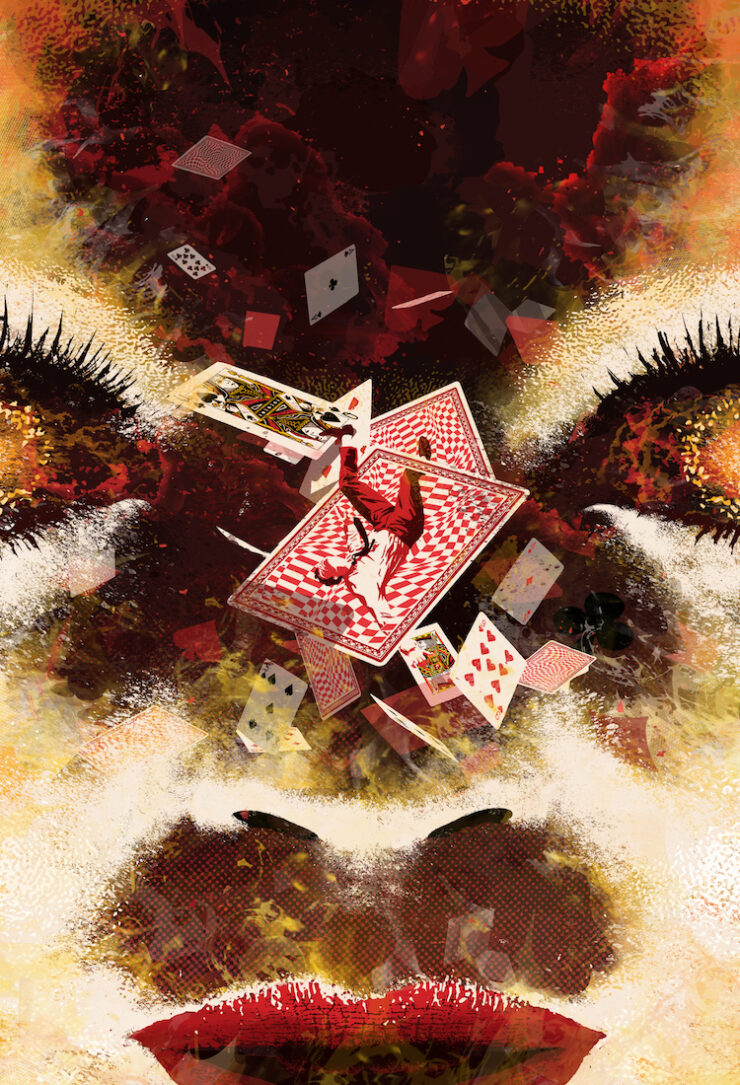
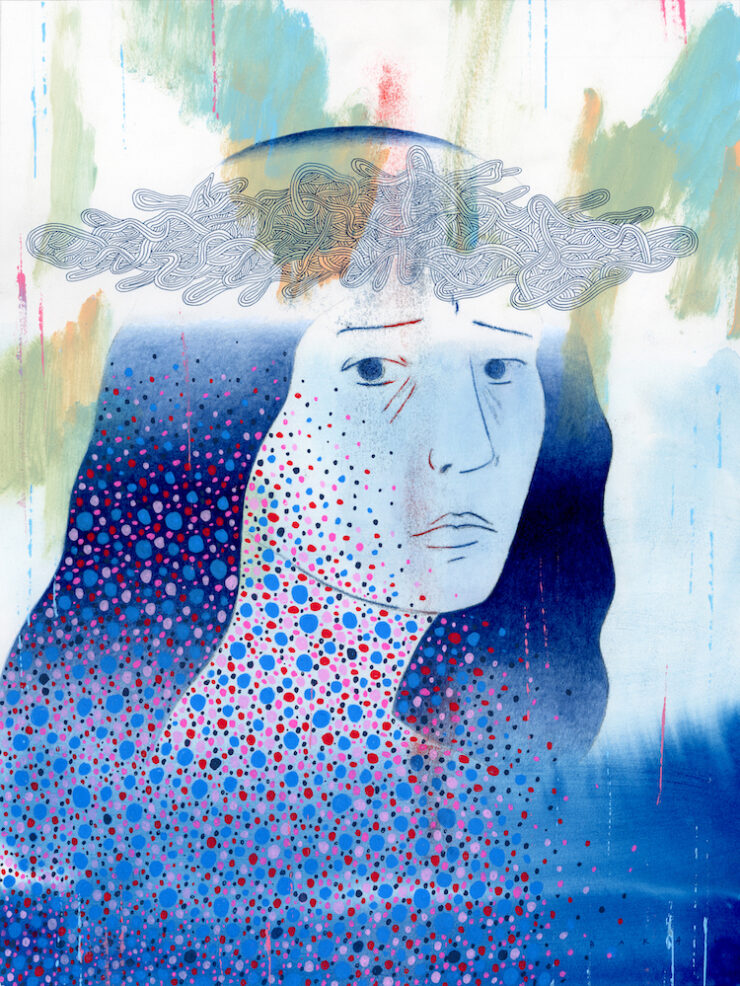
And loads of fun working with Ross MacDonald on the illustration.
Tuesday May 05, 2009 03:07pm EDT
VIEW ALL BY · Tuesday May 05, 2009 04:20pm EDT
As for the story, I enjoyed it, but felt the ending was uncomfortable, as if the author ran out of ideas and was tired of writing about John, so he just stopped.
Tuesday May 05, 2009 04:39pm EDT
FYI, the Geoff Johns/Alex Ross capsule of the DC Superman's history over the next 1000 years. (I particularly like the very last panel.)
http://4.bp.blogspot.com/_5VgL6ZXwkaw/SWK6q4wsp8I/AAAAAAAALtk/6jqvH98EZ1g/s1600-h/Justice+Society+of+America+22-9.jpg
and
http://3.bp.blogspot.com/_5VgL6ZXwkaw/SWK64-_3QYI/AAAAAAAALts/duiddERaTvA/s1600-h/Justice+Society+of+America+22-10.jpg
Tuesday May 05, 2009 05:14pm EDT
VIEW ALL BY · Tuesday May 05, 2009 06:15pm EDT
Lenny, I haven't read the JSA books, but I'll take a look for them next time I hit the comic book store. I *loved* those Alex Ross panels you linked to.
Mysickbones, I have faith that scientific thinking will come back around to support whatever cosmological theory best supports the story I want to tell. In other words, Big Crunch, Big Crunch na na na I can't hear you!
VIEW ALL BY · Tuesday May 05, 2009 10:15pm EDT
Re: the discussion about Teeter-Totter -- we can go back and forth all day about whether he would or wouldn't do things if not for the protagonist's existence, but, just as in real life, there's no real way to know. No being, human or super-, ever got anywhere wondering "What if?"
Ethan
Tuesday May 05, 2009 11:18pm EDT
The ending totally worked for me. Riding the wave into...
VIEW ALL BY · Wednesday May 06, 2009 11:55am EDT
They taught themselves to be better people, and then they conveyed those hard-won lessons to their son.
Which was lovely.
I enjoyed it a lot. Thanks.
VIEW ALL BY · Wednesday May 06, 2009 12:24pm EDT
Wednesday May 06, 2009 04:08pm EDT
Those JSA stories have now been collected under
the title "Thy Kingdom Come":
http://www.amazon.com/Justice-Society-America-Vol-Kingdom/dp/1401216900
Friday May 08, 2009 08:26am EDT
VIEW ALL BY · Saturday May 09, 2009 10:33pm EDT
It's admirable how epic a feel we get in such a short wordcount.
VIEW ALL BY · Monday May 11, 2009 12:49pm EDT
VIEW ALL BY · Thursday May 28, 2009 03:01pm EDT
Tuesday June 09, 2009 09:52pm EDT
Thursday June 11, 2009 04:26pm EDT
Sunday October 04, 2009 12:42am EDT
The last sun gives birth to the first.
The Last Son takes on the role of the First Father.
Maybe,he does all the "in the begining" stuff when he reaches the other end of the temporal Moebius strip.
Maybe,he does find his ending but something of his essence serves a similar function to HELA cells and provides the materials and template of life.
Perhaps,he becomes the Alpha AND Omega Man.
Or,perhaps,he is observed by someone else-a someone who may be powerful,may be good,may be infinite.
Or,that being could be just as much a part of nature as John but with its own origins,its own limits and its own secrets.
Perhaps,John's story hinges on how little we need rely on a backstory or saga-worthy adventures.
The big super-power was one posessed by John and the couple who raised him.
It is one any of us can have-even the Teeter-Totters.
It consists of making the best of what one has to work with and living that life one bit at a time.
It's all a super-hero can do.
It's all any of us can do.
If we got the chance to ask an unlimited God,He might say that it's enough.
Saturday October 17, 2009 11:20pm EDT
I thought Mr. Van Eekhout really had something when he made John's parents a mean drunk and a philanderer... I was like, "Hell yeah, it's Superman, but without the perfect cookie-cutter upbringing!" And then he kinda sorta didn't run with it. It was a letdown.
I did like the whole part with Aisha... that definitely evoked an emotional response. But the story as a whole..? I was really expecting something more outstanding from the publisher of so many books I've enjoyed over the years.