













I suspect we all have a little list of writers who others worship but we hate. I can’t stand Faulkner, even though Gabriel GarcĂa Márquez cites him as a great inspiration. I find The Great Gatsby almost unbearably whiny and tedious, even though Haruki Murakami calls it his favourite book. GarcĂa Márquez and Murakami rank very highly in my personal literary pantheon, though, so I’m willing to grudgingly concede that there must be something to both Faulkner and Fitzgerald, even if that something is fingernails-on-the-blackboard to me.
But weirdly I find it easier to understand wild praise for authors I despise than those who I mildly like. I’m thinking in particular of Neil Gaiman.
I’ve read a fair amount of Gaiman over the years: was enthralled by Sandman, really liked Good Omens, liked Stardust, thought Neverwhere was OK I guess, flipped through Smoke and Mirrors without much interest, and just this week read American Gods, which had some good bits but overall I didn’t much care for. And you know, I think I’m going to stop there. You’ll notice a certain trajectory.
Thing is, just about everyone else seems to have the opposite reaction to his oeuvre. Most of the SF readers I know speak of Gaiman with hushed adulation, and praise American Gods over Neverwhere, and Neverwhere over Stardust. I just don’t understand. Don’t get me wrong, I’m not here to claim that the emperor has no clothes; at worst I’m observing that his suit isn’t exactly Savile Row. But mostly I’m here to ask, out of genuine curiosity: what is it, exactly, that his fans get out of his books that prompts such devotion? Because I’m really not getting anything much at all.
There’s no denying that his talent is considerable. Even American Gods erupts into life every so often, usually in one of its often-brilliant Coming To America sideline sections—but then we return to the main storyline, and the fire goes out again, because both its plotting and its characters are shallow and contrived, fuelled by little more than pathos and a few flashy tricks. Much of the book’s main plot verges on being filler. (Also, I kept thinking while reading it, “You know, Douglas Adams told this same story much better in Long Dark Tea-Time Of The Soul.”)
He’s very good when he writes about gods, but his people are a whole lot less convincing. They tend to be either ciphers or archetypes, and the latter often veer dangerously close to caricature territory. His protagonists are mostly maddeningly passive: both Neverwhere and American Gods can be summarized as “man encounters mythical figures who proceed to lead him around by the nose for hundreds and hundreds of pages.” This appears to be a conscious choice; there’s a bit in American Gods where the protagonist is suddenly exultant that he has actually done something, for once—on page 451! But it’s no less off-putting and frustrating for being deliberate.
But I think there’s more to my failure to engage than that. The gods and entities Gaiman writes about are clearly meant to resonate on some level, and they just don’t. I recognize the archetypes he’s writing about intellectually, but, outside of Sandman and Stardust, and even there only in patches, I don’t respond emotionally. Neverwhere should have been right up my alley—I’ve written fantasies about urban spelunking myself, and I’ve lived in London on several occasions. But instead it left me cold.
I’m quite willing to accept that the flaw is mine, not his ... but at the same time, I genuinely don’t understand what other people are getting out of his work that I’m not. So I ask you: why Gaiman? What about his work do you find so compelling? What am I missing?
VIEW ALL BY · Thursday February 19, 2009 02:48pm EST
Everyone tells me he's a really nice guy. Maybe that's part of it? I don't know.
Thursday February 19, 2009 02:53pm EST
I really think this is a case of too much hype. His work seems to be slipping a lot, or maybe it's just he's focusing more and more in an audience I'm not a part of (goth kids, perhaps?).
In any case, I don't think I will be reading much more from him.
VIEW ALL BY · Thursday February 19, 2009 02:53pm EST
VIEW ALL BY · Thursday February 19, 2009 02:57pm EST
I think the love primarily stems from his characters though. They veer somewhere away from stock tropes into a place between everyday foibles and the possibility of new archetypes.
VIEW ALL BY · Thursday February 19, 2009 03:11pm EST
I think his characters are surprisingly human and react as such to supernatural dilemmas. Tristan is a great example of this. He's a scrawny selfish prat at first but not a bad person with potential for growth. Grow he does and gets the glory. I mean you could argue he didn't have to grow but who would have wanted to read that story anyway. The same goes with Shadow. Weird shit is happening and I think I'd wander around as dumb as a slug for a bit too.
I like that his younger characters are more apt to action because weird crazy stuff makes more sense to a kid.
So in conclusion...
His flow is right for me, his voice is clear, his characters act according to my view of reality, etc
He's also dreamy but that's a whole different topic.
Thursday February 19, 2009 03:15pm EST
Perhaps!
VIEW ALL BY · Thursday February 19, 2009 03:21pm EST
http://shetterly.wordpress.com/2008/03/03/how-to-make-a-living-making-art/
"But for Neil, it wasn’t just luck: he managed his tribe. He hired a publicist early in his career—I remember thinking, “You hired a what?” when he told me. He spent an astonishing amount of time on the road, away from his family, giving readings and signing autographs, treating each fan with friendly respect. He knew from the start of his career that his tribe needed managing, and he has managed it well ever since."
In other words, he's a great self-promoter. This isn't a criticism, but it goes toward explaining why some of us have this sense that Gaiman's popularity is perhaps a little out of sync with the kind and quality of writing he does.
Sort of like Ansel Adams in photography -- Ansel Adams was a great photographer, but that isn't why he's one of the few photographers who is also a household name. It's because he was a shameless self-promoter who set out to become a household name, and did a fine job of it.
As to the actual quality of Gaiman's work -- I like some of it a lot, Neverwhere in particular. But whenever someone who hasn't read Gaiman yet asks me about him, I encourage them to read Lisa Goldstein instead, because I think a lot of what Gaiman does well she does even better.
Thursday February 19, 2009 03:21pm EST
VIEW ALL BY · Thursday February 19, 2009 03:25pm EST
Gaiman is in the business of storytelling, and what he does, he does remarkably well. He's rooted in the English tradition of Chesterton and Kipling (among many others), and if that's not appealing to someone as a reader, than it's a good bet that Gaiman's work won't feel satisfying either. I appreciate the tradition, I love the allusiveness, intelligence, and playfulness of a great storyteller, and so I enjoy his work very much. To each her own, right?
Thursday February 19, 2009 03:50pm EST
I think what keeps me coming back to Gaiman again and again is his writing style. As a language enthusiast, I'm very sensitive to this sort of thing. A writer can create the most engaging plots and characters, but if his or her writing style and use of language doesn't resonate with me, I have a hard time sticking with them. Gaiman's style, on the other hand, tends to be at once very conversational and yet full of metaphors and other little flourishes.
It also helps that, since I'm legally blind, I listen to all Gaiman's work in audible form. He narrates most of his work himself, with the exception of American Gods which is excellently rendered by George Guidall.
I do agree that maybe the fact that he's such a nice guy accounts for some of his success. In his blog entries and in his interviews, he strikes me as humble, whimsical, and generous. I certainly don't pretend to know the guy, but that's the impression I get. As much as I wish I could say I was objective, and considered his work solely on its own merit, I do think this sort of author/reader rapport counts for something.
Thursday February 19, 2009 04:00pm EST
The reason I like Gaiman is that he can be both subtle and action-oriented without forcing the transition. He has this way of telling a story where he doesn't have to have something explode on every page to keep me interested. I can understand why that would bore some people I suppose, but I don't like it when authors feel like they have to speak to the lowest common denominator to write something marketable.
Say what you will, but being nice to readers can only get you so far. You could hand out free ice cream sundaes at every signing and you still couldn't get someone to sit down for sixteen hours and slog through over a hundred thousand words of text. No amount of smiling or making nice is going to get someone to do that unless they want to.
I guess what I'm saying is that I find Gaiman has this nice rich pace where he's not hurrying from plot point to plot point like he's trying to play hot potato with scenes. He has this very organic "blossoming" of plot that I don't think many other authors have.
My two bits, at least.
Thursday February 19, 2009 04:06pm EST
All my friends that introduced me to Gaiman love his later works more, which I never quite understood. I pretty much started with his more recent books, worked backwards, and began liking him more and more.
It seems Gaimam is just growing up through his writing. his early works are adventurous, and he is going a bit more backstage behind life with his more recent works. From the direction he's going, I am guessing he is trying to ascend genre fiction into modern literature.
I personally read more for adventure than literature, so I don't think I will like him much more than I liked Neverwhere and Stardust. We'll just have to wait and see until I get into Sandman.
Thursday February 19, 2009 04:10pm EST
VIEW ALL BY · Thursday February 19, 2009 04:24pm EST
I'm not surprised that he's hit and miss with others. Most authors I adore are hit and miss with me. (But I adore them because when they hit, they really hit.) For me, Gaiman hits my sweetspot more than any other author I can think of right now.
VIEW ALL BY · Thursday February 19, 2009 04:51pm EST
Could say so much, but simply, he plays with conventions. I loved how bad things got in AB and how long it went bad before he gave us the fantasy genre demand of a happy ending again; countless examples in Sandman; but in AG I was bored because the play with convention didn't seem to go anywhere. On his blog he mentioned that 1/5 readers of AG don't get it / don't like it. I'm that one.
VIEW ALL BY · Thursday February 19, 2009 05:14pm EST
VIEW ALL BY · Thursday February 19, 2009 05:15pm EST · amended on Thursday February 19, 2009 05:16pm EST
1. His ease of word use. Which is not to say that what he writes is easy, but that it feels easy. He flows well, and while there are a lot of authors who have more stylistic grandeur, they don't have that flow.
2. His characters. They're one step to the left, but not too many; they don't constantly beat themselves up, but aren't perfect; they're down-to-earth without being boring. Again, nothing striking, but very flowing.
ETA: Well, okay. Sandman beat himself up constantly.
3. His storytelling. This a major combination of #1 and #2. You can also tell he has a good grasp on this dragon because it also comes out in his reading. Just about any writer can tell you that this is the hardest part to get right. All the style and funky characters in the world will not help you if you can't get #3 going.
As a result, the synthesis of his storytelling is greater than the sum of its parts. So to speak.
4. Mythology. I love mythology, folklore, and his playing with it, that playing with such a subtle grasp that means he *gets* it. He doesn't simply use the symbolism as a means to an ends.
This pretty much means that American Gods was a winner for me, although it's a very heavy novel. Heavy doesn't usually go over well with folks.
5. He's a nice guy. I met him in person once. They say you shouldn't let the personal affect your objectivity, but I will say that it's much better to read an author you like as a person rather than an author you hate as a person.
It's why I prefer reading John Scalzi, for instance. Or Wil Wheaton. It's not that they're necessarily nice, but just that they're personable online and, if I get to meet them in person, also in person. There's a joy there that isn't present when I read, say, anything by Orson Scott Card, even though I still enjoy the Ender series.
I don't think it's something to be ashamed of, and I think that it's something that writers should be aware of. "Don't be a dick" as Wil says.
VIEW ALL BY · Thursday February 19, 2009 05:35pm EST
First and foremost, I think he's one of the best storytellers around. His stories are rich and layered without being bloated or dense. His characters are believable and real--their actions always feel like exactly the thing they would've done. And perhaps more than the rest, his prose has a clarity and humor that always makes me want to read the next sentence, and the next, and so on.
AG is one of my favorite books, but I'm a mythology geek, and I love the story's structure and its unraveling. Anansi Boys had an astonishingly good opening chapter but the rest of the book was disappointing. Neverwhere and Stardust I both enjoy but don't love. His children's books are utterly charming to me.
While he's personable and a great self-promoter those really don't play into my love for the books.
VIEW ALL BY · Thursday February 19, 2009 05:49pm EST
But it's probably personal taste. For some people, the passive heroes, digressions, and writing stlye just don't work. Like you, I hated the Great Gatsby, and i have no desire to reread it to change my opinion. I also swore off Garcia Marquez after reading Love in the Time of Cholera (I'm changing my mind currently, and considering reading 100 Years of Solitude, altho I haven't made my decision yet). Some writers just don't work for some people.
VIEW ALL BY · Thursday February 19, 2009 06:10pm EST
1. No one can succeed for longer than a year or two on pure hype. I'm trying to remember the name of an annoying comedian from the '90s who illustrated that well--ah! Pauly Shore. With nothing but the right resources, you can have a brief career. You can't have a long one.
2. Neil doesn't "manage his tribe" cynically. He enjoys the things that managing a tribe requires. If those things don't sound like fun to you, the tribe you're hoping to cultivate will know you're faking it. As far as tribe management goes, Neil's in great company. Mark Twain was also great at readings and speeches and doing the things tribe management required in the 19th century.
3. If you're not in his tribe, no big. The reading world would be awfully boring if there was only one tribe. Neil keeps his tribe very happy, and that's what counts if you hope to make a living making art.
VIEW ALL BY · Thursday February 19, 2009 06:12pm EST
Thursday February 19, 2009 06:16pm EST
However I was hooked to read American Gods when I found out that part of it took place in House on the Rock, one of my very favorite places. There is definitely some quality of the oddity of the American roadside sort of thing that definitely grabbed my attention in this book, and I think it was that attraction to House on the Rock I was looking for (and found). So maybe if you don't like that odd quality, it's not as pulling.
I think what grasped me about his writing is that it is very similar to Douglas Adams', on some level, that it is very comfortable for me to read. And every once in a while, there is a conversational quirk to it that catches you off guard.
Also, the tone of American Gods just feels like a mystery to me... The mythological tone helps as well, but there is something about that mystery that pulls you in to investigate it. But maybe that is just me because I like mystery novels; I read Anansi Boys recently and did not enjoy it nearly as much.
VIEW ALL BY · Thursday February 19, 2009 06:38pm EST
Hrm. Well, for one, I love his narrative voice. Somehow, it is obvious that there are both a sly wit and a good heart behind every word. The writing is somehow friendly and personable.
And for another, his work is all informed by fairy tales and mythology...and not Disney fairy tales and myths, either. The real deal. And in the real deal fairy tales and myths, there is a kind of realness that goes beyond reality...which may be why you tend to find his characters less than convincing. In fairy tales, the characters aren't really meant to be actual flesh and blood people; at their best, I think they are instead summations of human characteristics and archetypes that, despite being unreal, are true on a level that goes a bit deeper.
And, as far as I'm concerned, "American Gods" isn't about what happens. It isn't about action. It's about all the little things and the small strange truths. It's quiet. Nothing really HAPPENS, but so much changes. I don't know; I don't think I'm making much sense, here.
I guess like anything else, it's all a matter of taste.
VIEW ALL BY · Thursday February 19, 2009 06:59pm EST
That being said, my absolute favorite work by Gaiman is a random short story of his that appeared in Smoke and Mirrors, "The Goldfish Pool and Other Stories". This is largely a personal thing, because I happened to be working in Hollywood at the time and have a fascination with its history/foibles, but there was also just something about the elusive sadness of the story that really got to me.
One thing Gaiman really has a handle on is that sense of the ephemeral and fleeting nature of things, and the quiet tragedy inherent in that truth, whether you're talking about a forgotten silent film star or the Norse pantheon. I have a great appreciation for that, even if it's not what I want every day.
Thursday February 19, 2009 07:52pm EST
Pratchett is one of the finest exponents of the 'ripping yarn' in SF/F, but you never get to the end of his stories and go, I wonder what will happen next or, why did he do that?
Gaiman isn't like that. The overwhelming sensation I get from his stories is that we are strangers, invited to peer over the shoulder of someone else's world. There are always echoes of lingering regrets, past choices made, and inner feelings in the text which are never fully explored or explained.
And the endings are often just as inconclusive - you never feel that the writer's universe ends when the book does, it's just that there aren't any more pages.
I find I have to feel around the edges of what is written to work out the motives of the book's protagonists. Sometimes I feel I have worked them out (American Gods), sometimes I don't (Anansi Boys). But either way, it's an active and engaged style of reading which I find very enjoyable.
VIEW ALL BY · Thursday February 19, 2009 09:01pm EST
Sandman really good, Good Omens good (had help though) Neverwhere, American Gods etc. = blah.
Some good short stories though, although lots of very ordinary.
Thursday February 19, 2009 09:57pm EST
Basically, I think Neil brings together a bit of a perfect storm of nice and interesting person/good self-promoter/easy to read style/solid narratives that feel complex and emotional, but often aren't overly so.
My problem has always been that I seem to have read the same stuff Neil's read. I like Lord Dunsany a lot, so Stardust was a bit pale by comparison. I think Thorne Smith's a fantastic comic writer, so, well, that means that Anansi Boys was a bit pale by comparison. I loved the Long Dark Tea Time of the Soul. Hence, American Gods was only kinda mostly good. Engaging enough, but I'd seen the same sorts of ideas played out before. I haven't read much Kipling, though, so perhaps I'll enjoy the Graveyard Book.
Also, to be a little harsh and also just to ramble about something that has annoyed me lately: has no-one else noticed that Neil's repeating himself? 'October in the Chair' in fragile things was very close to being a rewrite of the schoolboy and the ghosts episode in Sandman. There are other examples too. A fair amount. Everyone eventually steals from themselves a little when writing, but... well... it seems to have happened a lot lately...
VIEW ALL BY · Thursday February 19, 2009 10:21pm EST
VIEW ALL BY · Thursday February 19, 2009 10:27pm EST
I was trying to think what to read tonight - and now I think I'll reread part of his Eternals miniseries.
Thursday February 19, 2009 10:43pm EST
American Gods was spectacular until I read Sandman, which blew my mind to the point where I needed tissues for my ear. My favorite bits by him are his short stories in Fragile Things and Smoke and Mirrors. Other People is my absolutely favorite. I haven't read Coraline or the Graveyard book, though I would like to. Actually my least favorite of his works I've read was Anansi's Boys, which not so many people've really brought up. Stardust was great and Neverwhere was appropriately dreary and creepy and nice. He'll always be near and dear to my heart.
Thursday February 19, 2009 10:50pm EST
For me anymore, that variety is a deal breaker. I burnt out on fantasy in the middle of college. I’d read more than enough of the field to know every cliché and every trick, and I started hating everything I was picking up because I’d already seen it. It made me sad, because the itch that drove me to read fantasy in the first place didn’t go away. So, for a few years I mostly reread old favorites and bad science fiction (plus, totally broke in college, so that saved me money).
When I got a real job and some money, I didn’t return to fantasy. No, I went with comic books, which were just starting to regularly put out trade paperbacks and graphic novels. The Dark Knight Returns had been on my bookshelf since college and the first half of Maus I bought for a college course. The Crow, Watchmen, and the JLA all followed. Then I picked up the first volume of Sandman.
I love series. I always have. Part of the problem I was having with fantasy novels were single novels that I enjoyed were often part of a series in which the same story is told again and again, although most authors at least have the decency to change the main characters every few books. There’s nothing wrong with it, since that was what many readers want. Heck, some of those old favorites I mentioned are just those sorts of books, which I happened to run into before I got burnt out.
The Sandman is a series, but it’s not the same story again and again. Instead it changes characters and story types, moving from boy stories to girl stories, from minor characters to guest stars, from pop culture to Shakespeare, from mythology to harsh reality. And yet it builds a world and single story out of 76 issues (10 volumes) (4 Absolutes) that ends up being more than the sum of its parts. It is a staggering piece of literature.
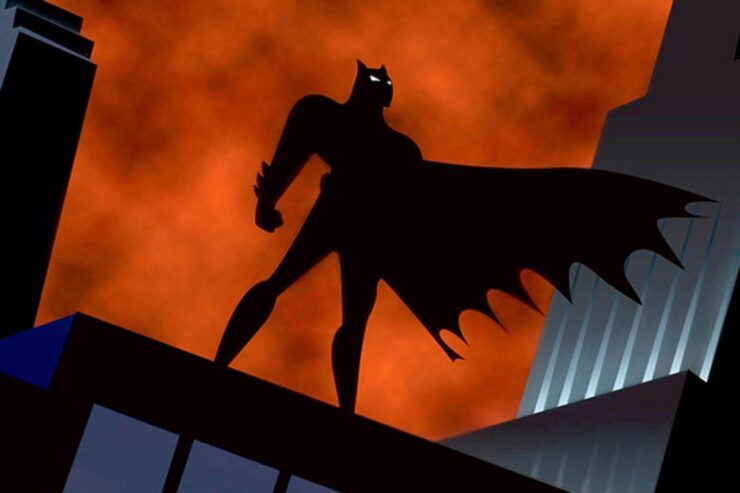
The variety did not stop when Neil moved on to other works. The comedy of Good Omens, the fairy tale of Stardust, the mythological weight of American Gods, and the many deaths of Batman – these are all different kinds of stories with different needs and different audiences. Neil does a good job of entertaining each of those audiences, but it should not be a surprise that some fans of his puppet show are not enthralled by his children production about two small fish and a parental figure.
Neil Gaiman is big deal author not because of he has a big following, but because he has many different big followings. He even has fantasy snobs like me, who appreciate good authors who don’t sell me the same thing I loved before again and again.
VIEW ALL BY · Thursday February 19, 2009 11:15pm EST
OMG Who let the lit nerds in? ;P
For me, what attracted me to Neil Gaiman was Dave McKean's evocative cover art on Sandman. I was a late-comer to Neil Gaiman and what Sandman was for me was about pushing the boundaries of storytelling using the graphic novel as a medium. Sandman is definitely something I want to return to later ... with a more critical eye.
VIEW ALL BY · Friday February 20, 2009 12:27am EST
Friday February 20, 2009 01:33am EST
VIEW ALL BY · Friday February 20, 2009 02:40am EST
That and the fact that he's very heavy into gods, mythology and fairy tales, which is one of my own obsessions as well.
But I must agree with many that American Gods is one of his weakest books. I think there are several parts of it that are good or even great, but as a novel it fails for me. I almost think he should have scrapped it and turned it into a themed collection of short stories instead. I think his very best work is found in Smoke and Mirrors and Fragile Things. "Murder Mysteries", "Snow, Glass, Apple", "A study in Emerald", "Troll Bridge" (and my personal favourite poem EVER) "The day the Saucers Came" are all sublime.
VIEW ALL BY · Friday February 20, 2009 05:31am EST
This technique is limited a little by the novel form - there isn't as much room to leave things mysterious and unsaid, and for this reason American Gods (arguably his first 'real' novel) is a relatively weak work. But then look at The Graveyard Book - utterly sublime. Honestly I think the reason GB works in ways that his previous novels didn't is because he's played to his strengths; the book works as a series of related short stories with a central theme, rather than as a longer, chunky novel.
VIEW ALL BY · Friday February 20, 2009 06:36am EST
I think Sandman is way above everything else he's written. Otherwise, I agree his best work is in the shorter pieces found in Smoke and Mirrors and Fragile Things.
Liked Coraline, Stardust so-so, Neverwhere probably the one I least like.
Enjoyed Good Omens, but it feels more Pratchettian to me.
I like Pratchett also, but he hits a plateau with me- always good,never special.
American Gods I think is good, not great, and the coming to America bits are indeed the best parts.
Also, I kept thinking while reading it, “You know, Douglas Adams told this same story much better in Long Dark Tea-Time Of The Soul.”
I didn't. Great Douglas Adams fan, but the Long Dark Tea-Time Of The Soul is definitely his weakest.
Friday February 20, 2009 07:21am EST
Neil Stephenson is another one who just doesn't do it for me.
Also I hate Catcher in the Rye and On the Road since we're dishing. Ahh feels good.
Friday February 20, 2009 08:58am EST
Where Gaiman best succeeds, in my opinion, is when he takes a long-standing yet presently neglected trope or archetype, be it an obscure comic book character or a little-known African spider deity, and uses that character as a springboard to launch a modern reinterpretation of a classic set of myths or fables. He gives us characters and stories we thought we knew in a way we never really considered them, yet without removing the attributes that makes them who they, essentially, are.
Gaiman is probably not the most "realistic" novelist (a questionable idea in a business where we pay people to lie to us), but he is a damn fine storyteller. He is a 21st Century version of that person who summons you closer to the fire to hear the tales he has to tell.
He's also a high fantasist (i.e. more Cabell and C.S. Lewis than David Drake or Terry Goodkind), which means that you've got to approach his work with a certain amount of leeway for metaphor. If you try to hard to pick the bones out of his stories, the skeleton's going to fall apart.
Like him or not, Gaiman is the kind of storyteller we need, and have done since Homer and the unidentified authors of Gilgamesh and Beowulf.
Friday February 20, 2009 10:57am EST
There are some excellent, sophisticated fantasists who, quite frankly, are not very readable if you're not already part of the fantasy conversation. And there are other fantasists whose work turns off readers with more experience because the writers have used source material in shallow, not-well-thought-out ways.
Gaiman manages, generally, to appeal equally to experienced and novice readers in the field.
Friday February 20, 2009 11:16am EST
VIEW ALL BY · Friday February 20, 2009 01:40pm EST
VIEW ALL BY · Friday February 20, 2009 02:09pm EST
VIEW ALL BY · Friday February 20, 2009 02:13pm EST
I thought I was the only one who hated "Catcher in the Rye" and "On the Road."
VIEW ALL BY · Friday February 20, 2009 04:22pm EST
While I've enjoyed some of his novels, I find that his trick of taking old literary tropes and reworking them into modern narratives works better in comics, at least for me.
I also agree with Will Shetterly—Gaiman owes a substantial part of his success to truly enjoying the managing of his tribe. And there's absolutely nothing wrong with that. As a matter of fact, that kind of approachability and a positive disposition to engaging directly with your audience will become even more indispensable to the success of authors as we move forward into a networked future.
For better or for worse, and barring certain special, rarefied cases (which will probably have to be heavily mediated and underwritten by large publishers), the concept of the lone author in his or her garret, shunning contact with the outside world and constantly toiling away on his ouvre, is going the way of the dodo.
But I digress. To recap: in my book, Gaiman comics = Full of Win; Gaiman prose = Full of Meh.
VIEW ALL BY · Friday February 20, 2009 07:10pm EST
Gaiman isn't unique in this, but he makes characters whom I love and he has some just fun ideas For example in Neverwhere when Richard, the main character, becomes disconnected from above-london because he interacted to long with those of under-london. People of above-london literally ignore him, a particularly cruel "No good deed goes unpunished" fate.
Richard suffers from the same things I think a lot of people dislike about his books. He is a nobody. Thrust into a situation where he spends most of his time trying to come to grips with things and usually just running. It's only near the end that he takes control of path. I love those kind of main characters. Mind, the supporting characters in Neverwhere were all equally fun. They had personality.
Neverwhere is also rather unique in my collection of novels since I watched it first -- it was a BBC mini-series before it was a novel. The novel helped me love the story more. There was just so much more information and subtly that no visual medium could convey. It was the same story, but it was different. There was more detail and a few points where the mini-series required a leap of logic, he fixed to make the sequence of events flow better. I guess my opinions of the book might have been tainted by the mini-series, but I do consider it his best novel.
To make a long story short, I enjoy reading his books. That really about as much thought as I've ever given why I read his books. I enjoy them.
Monday March 09, 2009 04:54pm EDT
But yeah, I like his books because they show weaknesses of the characters, they are not some abstract heroic persons.
I probably need to read way more to learn if I really like Gaiman or is he just good compared to what I've read.
Monday March 09, 2009 06:02pm EDT
Tuesday October 06, 2009 04:20am EDT
I'm very much with you. The Sandman, Good Omens and also the original four-part The Books of Magic miniseries, which appears to have been overlooked here, I adore. Gaiman's later works, not so much, though I agree that American Gods had its moments.
If I had to sum up why in a single word, I think I might choose humor. Not that the Sandman is one big chuckle fest, clearly, but I always smile at the thought of Lucifer sprawled in a lawn chair reluctantly admiring the sunset, or Dream getting bopped with a loaf of bread. Or of John Constantine returning from a 'chat' with the stewardess with a big red hand print across his face and being called a 'Big limey dork!' by Zatanna, or Crowley comparing Heaven to endlessly watching the Sound of Music without a decent drink.
If there were such moments in American Gods, for whatever reason, they just didn't stick with me, and I don't think I've ever managed to get through any of his other works, except for a short story anthology (which, I believe, was the reason I never read the rest.)