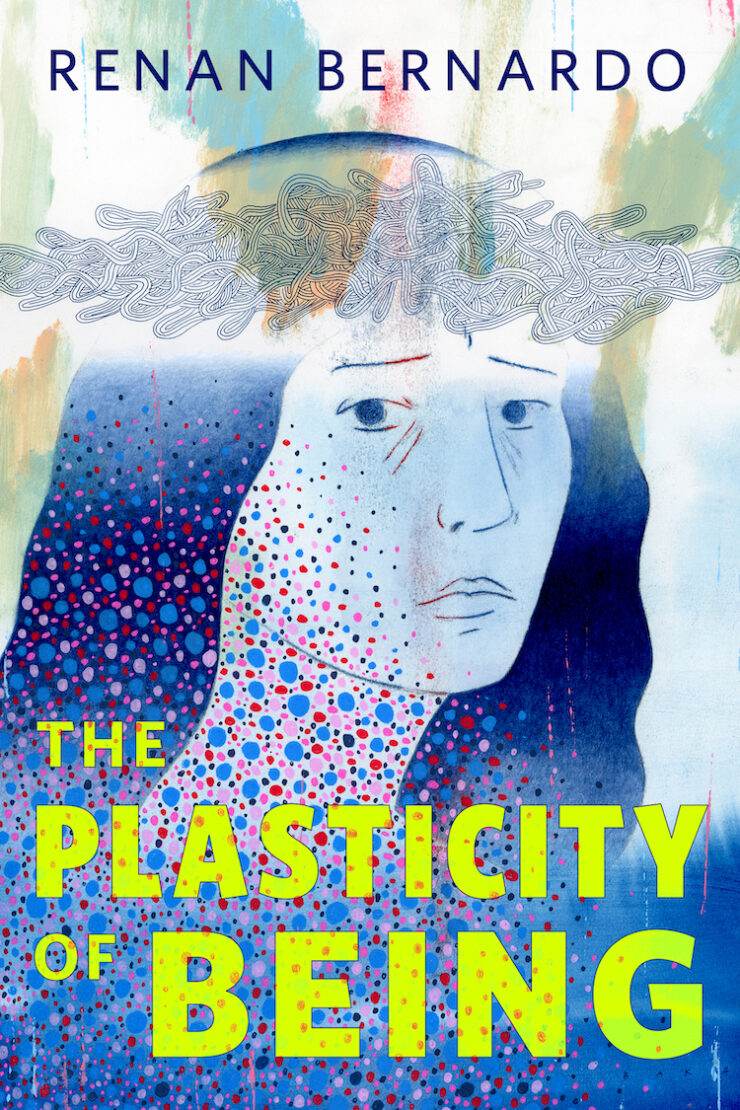
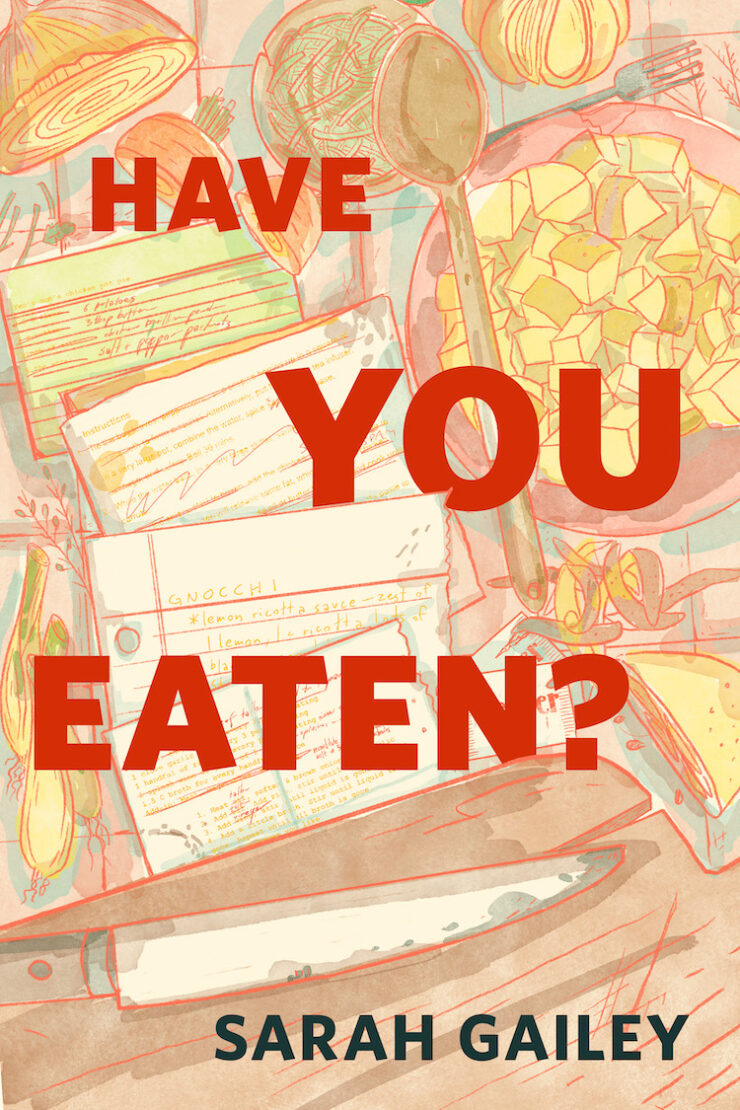
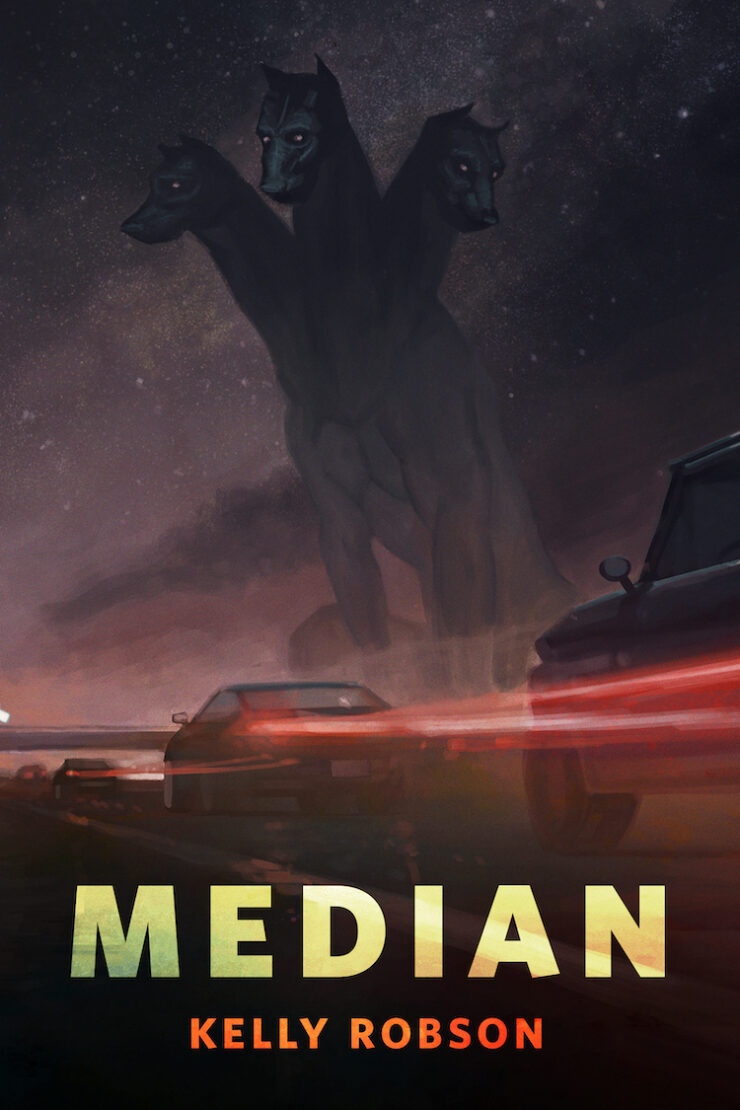
May 23, 2012 Legacy Lost Anna Banks Gaining her was just as hard as losing her. May 16, 2012 Dress Your Marines in White Emmy Laybourne Murder in powdered form. What a life. May 9, 2012 About Fairies Pat Murphy Some things happen whether or not you clap your hands. May 3, 2012 At the Foot of the Lighthouse Erin Hoffman I am American. We are all Americans.
From The Blog
May 25, 2012
Five Super Villain Schemes So Crazy They Might Just Be Crazy
Ryan Britt
May 23, 2012
Sleeps With Monsters: Go Thou and Read Mary Gentle
Liz Bourke
May 23, 2012
“Andy Warhol’s One Of US?”: Men In Black 3
Danny Bowes
May 22, 2012
"Still Alive"
John Scalzi and Jonathan Coulton
May 21, 2012
Comic Book Movie Heroine Evolution
Shoshana Kessock
Showing posts by: danny bowes click to see danny bowes's profile
Wed
May 23 2012 10:00am

A spoiler free review of Men In Black 3

The first Men In Black was sharp and funny, a tight, effective summer special-effects picture. Men In Black II was dumb, endless (even though it was ten minutes shorter than its predecessor), and worst of all, not any fun. One good thing it did, though, was set the bar so low for Men In Black 3 that all the latest installment had to do was not suck to be an improvement. Thankfully, Men In Black 3 exceeds those modest standards with room to spare, and while nowhere near as good as the first, is quite an entertaining bit of blockbusterism.

[Read more]

Mon
Apr 30 2012 11:30am

So, The Raven isn’t very good. It takes a randomly selective reading of Edgar Allan Poe’s stories and a few bits of triviata from his life and grafts those onto a by-the-numbers serial killer narrative in which the Poe character, the ostensible lead, is completely superfluous.

[Read more. Spoiler, of course.]

Mon
Apr 16 2012 12:15pm

Cabin in the Woods spoiler review

Joss Whedon and Drew Goddard’s maybe-horror film Cabin in the Woods was a bit impossible to review upon its initial release day, at least for outlets who respected Whedon and co’s wishes to keep the surprise intact for moviegoers. (In fact, my spoiler-free review can be easily distilled down to, “No spoilers. If you like Whedon you’ll like this.”)

But now it’s Monday and those of you who wanted to see it have most likely done so. It’s spoiler time.

[Spoilers for Cabin in the Woods]

Fri
Apr 13 2012 3:00pm

There’s been a bit of a to-do online about spoilers in negative reviews of The Cabin In The Woods, which are really pretty awful and miss the point of the movie pretty completely. There’s also been a bit of minor tut-tutting about spoilers in the movie’s trailer itself, but considering the “spoiler-y” bits from the trailer are addressed in the movie’s first shot, they’re not that bad (though I’m still not going to specify what I’m talking about).

[Read more. No spoilers in the article!]

Wed
Apr 11 2012 1:00pm

Something I weirdly kind of miss — to which Lockout (aka “Guy Pearce In Space Jail”) is a bit of a throwback — are the days when science-fiction and other genre films were a little disreputable. When there are no expectations for a picture to be good, one can revel a bit more in its glorious badness. This is the way to approach Lockout. It is, after all, a movie whose (anti) hero has to break into a jail, in space, whose reason for being in space is because, dude, space jail. It’s a combination of tried-and-true action movie tropes (its status as SF is nominal, coincidental, and secondary) and the beautifully conceived rhetorical question “Wouldn’t it be the raddest thing ever if the jail was in space???”

[Because it totally would!!!]

Thu
Apr 5 2012 1:30pm

A review of Morgan Spurlock’s Comic-Con Episode IV: A Fan’s Hope

The most important thing for geek audiences to keep in mind when watching Morgan Spurlock’s documentary Comic-Con Episode Four: A Fan’s Hope is that it means well. Spurlock, a self-professed comics fan, has said, essentially he made the film as an excuse to go to Comic-Con.

The doc premiered at this past fall’s Toronto International Film Festival but its apparent purpose — to introduce the uninitiated to convention culture in particular but geek culture in general — feels a bit dated at this point, with Comic-Con now such a pop-cultural institution.

[Read more]

Tue
Mar 20 2012 4:00pm

The announcement, by the eminence grise of the (at least second) reboot of Teenage Mutant Ninja Turtles, Mr. Michael Bay, that in this iteration the turtles are going to be aliens has not, to put it mildly, been received terribly well by the internet at large. I’m not here to critique that reception; if the outrage has any problem at all, it’s one of scale, in that nothing should ever be called “Ninja Turtle-gate.” Make no mistake, though: this is, indeed, an unnecessary bit of fan trolling that cannot but ultimately hurt the reboot.

[Read more]

Fri
Mar 9 2012 10:00am

One of the major themes of Philip K. Dick’s work—along with drugs and being awesome—is identity. The question of not only who they are, but what it means to simply be in the first place, is a quite common one for a PKD protagonist, perhaps even more so in the film adaptations of his work. Whether this is due to a greater focus on this question by the filmmakers behind those adaptations or a function of the necessary streamlining when turning a book into a movie, movies made from Philip K. Dick novels and stories have identity front and center. While it is more apparently an intellectual and philosophical concern in a picture like Blade Runner, I would argue that it is even more essential when articulated in Arnold’s question, “If I am not me, then who the hell am I?” in Total Recall.

[Read more]

Mon
Feb 6 2012 4:00pm

The idea of constructing a movie out of what purports to be — but isn’t — found footage is not necessarily a bad one. The “found footage” conceit lends a level of hyper-naturalism, a kind of camera phone-captured really really real life, in theory. That it’s been used so often for horror and SF movies recently makes a degree of sense as well, as suspension of disbelief is a concern in both genres. Inevitably, there’s a point at which it becomes almost impossible to sustain the conceit — usually toward the end of the second act and in the third — but with Chronicle, writer Max (son of John) Landis and director Josh Trank have made a good enough movie that, when the found footage conceit occasionally falls apart, in the end it doesn’t really matter.

[Read more]

Wed
Jan 18 2012 2:00pm

Michael Biehn’s been on my mind a bit lately, because he’s awesome, and because he’s in a picture that just opened in New York called The Divide. The trailer — which I came to find consisted almost exclusively of footage from the first ten minutes of the movie only — set up the premise concisely: a nuclear explosion in “New York City” (it’s not New York City) forces a bunch of people into the basement of their apartment building, where they’re trapped with an axe-wielding Michael Biehn. “Can’t miss” would be a bit of a stretch with that premise, but even the remote possibility that Michael Biehn would chop Milo Ventimiglia in half with an axe, not to mention the intriguing dramatic possibilities of trapping a bunch of people in a room together, was enough for me to give The Divide a shot. I would like that shot back, please, so that I can give it to a movie that isn’t a disgusting, pointless waste of time and resources.

[Run! Run while you still can!]

Tue
Dec 27 2011 1:30pm

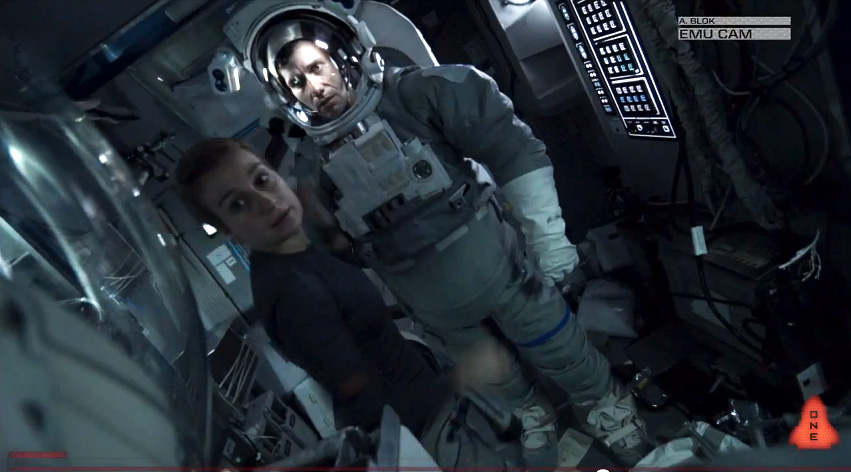
Bringing down the curtain on 2011’s cycle of alien invasion movies, The Darkest Hour is neither the best or the worst of the bunch (a dishonor held firmly by the staggeringly awful I Am Number Four). It’s quite dumb and the special effects are ridiculous, but it avoids being offensively bad and has the excellent taste to be over in less than an hour and a half, which means that, bad as it is, at least it’s not bad for terribly long.

[Read more]

Fri
Dec 9 2011 3:00pm

With the Cold War an increasingly distant memory, the espionage fiction that was one of its only redeeming aspects reads more like alternate history SF than it does illustrating how uncomfortably close we were to nuclear obliteration for five decades. Rather than—as many of the leading authors of espionage fiction feared—rendering the genre obsolete, if anything, it’s all a lot more fun now. Thus, the work of John le Carré can be properly appreciated for how gorgeously written and intelligently conceived it is, without the terror of the actual Cold War hanging over the reader. Many fans champion Tinker, Tailor, Soldier, Spy as his apex. The new movie adaptation of that book, opening December 9th in New York and Los Angeles and throughout the United States in early January, may not have any bearing on the novel’s supremacy among the le Carré canon, but one thing is certain: it’s a really good movie.

[Read more]

Tue
Nov 22 2011 12:17pm

The new Muppet movie, titled simply The Muppets, is less about the Muppets themselves than it is about Muppet fandom. Lead human (i.e. non-Muppet) actor Jason Segel, who also co-wrote the script, sets the tone of the movie with his performance — he always seems on the verge of breaking out into ecstatic giggling, much like audience who’ve grown up with the Muppets (and there’s at least four decades of us out there) would, if they found themselves in the presence of real-live Muppets.

[“I Always Dreamed We’d Be Back Here.” “Dreams? Those Were NIGHTMARES! O Ho Ho Ho Ho!”]

Tue
Nov 15 2011 9:00am

The Lovers, The Dreamers, And Me: The Muppet Movie

I have never, I must confess, been the biggest Muppet fan in the world. Before you inquire about the barren depravity of my soul, let me explain: I always liked them, but as a kid it was more like “Muppets, cool” than going full-on Animal. The main presence Jim Henson had in my life was Labyrinth, which I was busy watching over and over again (neglecting the Muppets). Then, somewhere in my mid-twenties, a couple good friends of mine noticed I was near-Muppet-illiterate and decided to rectify the situation by making me watch about four episodes of The Muppet Show back-to-back, and I was flabbergasted. I had had no idea how razor-sharp the comedy was, how cavalierly it broke the fourth wall and commented on itself. The Muppet Show basically mastered show business. It was laugh-out-loud funny but never in a cheap way, it never resorted to shocks or meanness to get laughs.

[Read more]

Mon
Nov 14 2011 9:05am

Director Tarsem Singh has established, over his first two features The Cell and The Fall, as well as numerous music videos and commercials, a reputation as a nonpareil visual stylist. This reputation is reinforced by Immortals, a tale of gods, heroes, and evil set in a little-known period in Mycenaean Greece called (according to the production notes) the Tarsem Age, where everyone except Mickey Rourke is absolutely gorgeous (not to mention Mickey Rourke is running a kingdom somewhere), everything’s lit like a Caravaggio painting, and the violence is awesome.

[Read more]

Fri
Nov 11 2011 9:00am

Stanley Kubrick spent a number of years following his (excellent) Vietnam picture Full Metal Jacket planning an adaptation of Brian Aldiss’ SF story “Super Toys Last All Summer Long.” The two main problems Kubrick encountered were finding a child actor capable of the necessary caliber of performance, and the technological limitations of late 80s, early 90s special effects. After watching his friend Steven Spielberg’s Jurassic Park, and being awed by the dinosaurs, Kubrick got the sense that visual effects technology had finally caught up with his vision for the Aldiss adaptation, which he was working on under the working title Pinocchio. He also became convinced that Spielberg was a better director for the project than he was himself, and spent the last few years of his life trying to convince a reluctant Spielberg to take the project on. Spielberg demurred, humbly telling Kubrick he was the better filmmaker and that he should direct the picture. The situation was still undecided when Kubrick passed away in 1999 during post-production of Eyes Wide Shut. Spielberg, as a tribute, decided to make the movie he and Kubrick had discussed, which eventually was retitled A.I.: Artificial Intelligence.

[Read more]

Thu
Nov 10 2011 3:00pm

Stanley Kubrick’s contributions to science fiction: Eyes Wide Shut

When watching Eyes Wide Shut the other night — an experience I did not enjoy — it occurred to me that over the years my assessment of it as a movie has jumped all over the place. I’ve ardently defended it as an underrated masterpiece, reluctantly classified it as a misfire from one of my favorite directors, and numerous points in between. Almost nothing in its entire two hours and forty minutes is literally happening, and the audience is given very little warning that this is so, which means if anyone ever invents the genre “stealth fantasy,” Eyes Wide Shut will be its Lord of the Rings trilogy. It’s a movie far more enjoyable to ponder and discuss than it is to watch, though not without some excellent moments.

[Read more]

Thu
Nov 10 2011 9:00am

Stanley Kubrick’s science fiction films: The Shining

The Shining is a bit of an oddity in Stanley Kubrick’s career for a number of reasons, one major one being that his initial motivation for making it was because he wanted a commercial hit. Choosing a Stephen King novel feels a bit weird, too; as awesome as he is, he’s in a slightly different category from people like Thackeray, Burgess, and Nabokov, the last three authors whose novels Kubrick adapted, and Schnitzler, to whom Kubrick would turn later.

[Read more]

Wed
Nov 9 2011 3:00pm

Trying to write anything shorter than book length about A Clockwork Orange is a difficult task, because there’s so much to address, but I’ll give it a shot. Stanley Kubrick had originally intended to make a movie about Napoleon as his follow-up to 2001 until someone looked at how much it was going to cost (about twice the most expensive movie ever made to date) and pulled the plug. Still in the mood to make something, Kubrick turned to Anthony Burgess’ 1962 novel about youth run amok, free will, and totalitarianism, and the rest is history.

[Read more]

Wed
Nov 9 2011 9:00am

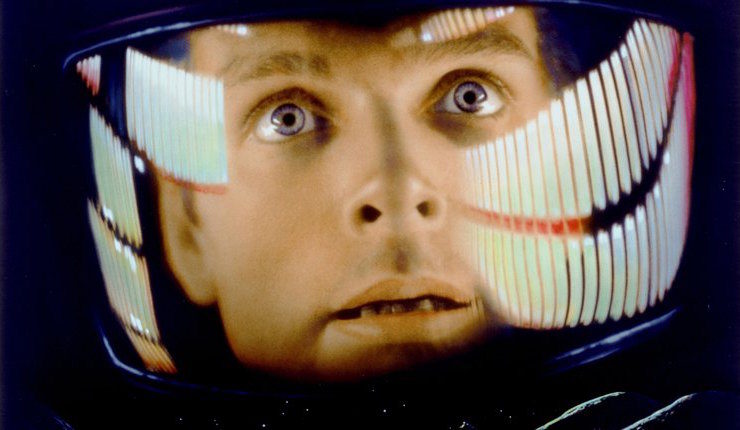
Where Dr. Strangelove may require a squint and tilt of the head to look like science fiction, there is no such problem with Stanley Kubrick’s next picture, 1968’s 2001: A Space Odyssey. Kubrick’s ambition, as he expressed to co-writer Arthur C. Clarke in his introductory letter, was to make “the proverbial good science fiction movie.” That was in 1964, some years before the rehabilitation of genre cinema’s reputation by the critical establishment, a huge element of which was the movie the two gentlemen would end up making. With no exaggeration whatsoever, it is a simple fact that science fiction cinema would not exist in the form it does today without 2001.

[Read more]