

Fri
Apr 1 2011 5:33pm
And You Were There: the Reality of Neverland, Labyrinths and Places Where Children Are Forever at Play

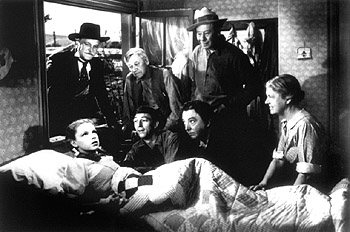
Wizard of Oz

I remember writing a defense of the movie Hook when I was pretty young. It came about when I noticed that there were all sorts of online reviews claiming the movie was an inferior piece of work, poor form on Spielberg’s part, “why is Julia Roberts Tinkerbell,” the list goes on. I couldn’t really understand the problem: if you’ve read or watched any version of Peter Pan, the boy who never grew up, there was always a part of you that wondered…but what if he did? Hook was a loving testament to that thought, and I adored it.

But in the end, the argument I chose to make was far simpler: this movie was for people who believed in Neverland. Not people who were overly concerned with continuity and casting choices and the fact that the Lost Boys were now on skateboards (which made perfect sense, by the way). This movie was for people who believed that Neverland was a tangible place, something they could reach whenever their heart was searching for some time to play.

How many of us believe that, I wonder? Because, as we’re often taught in our childhood stories, these places don’t exist. They’re just a dream. A hallucination. Our young, malleable minds trying to make up for what we don’t understand by creating something fantastical. It used to make me angry. In some ways it still does.

Why can’t Neverland be real?

Outside of The Chronicles of Narnia, nearly every well-known children’s story ends on the same note. The kid wakes up or turns around finds that they are home. Their adventures in another land equip them to handle a situation that they did not have the capacity or awareness to deal with beforehand. Everything is right in the world. The end.

In the film version of The Wizard of Oz, Dorothy wakes up and finds herself at home and surrounded by her family. They insist that this dream she had about Oz is the result of a little bump on the head; credence is given to their side of events when you see that nearly everyone in Dorothy’s “dream” looks exactly like someone from the real world. Either way, it’s not that important—Dorothy came to realize on her journey that all she really wanted was to be home, and home is where she is.

In Labyrinth, Sarah learns valuable lessons about growing up: that life isn’t always fair, that it’s important to be true to your friends, and most of all, that no one has power over her. She defeats the Goblin King and his kingdom shatters around her. Then she’s suddenly—yeah, you guessed it—back home. At the end, she sees her friends from the labyrinth reflected in a mirror. They reassure her that if she ever needs them, she only needs to call. The metaphorical point here seems clear—that we all need to return to the fantasies of childhood sometimes and appreciate what they have given us. Similarly to Wizard of Oz, most of the figures Sarah encounters in her imaginary world are dolls and stuffed creatures found in her room.

Versions of Alice in Wonderland have done the same, though Tim Burton gets some extra credit for the fact that his Alice continues believing in Wonderland after her story there has completed. Pan’s Labyrinth deals in the same tropes as well, and that may be the hardest of all these tales to swallow. Because if this world where Ofelia is a princess isn’t real, then the truth of that film becomes almost impossible to stomach.

Even the world of Neverland is supposed to exist in the minds of children. While J.M. Barrie may have had faith in the reality of that place, your average adult is not going to view it the same way, and that will affect how it is passed down to children. In some ways, even Narnia is guilty of this; Christian allegory aside, the Pevensie’s learn in The Last Battle that they aren’t in the real Narnia. All that they had accomplished in that world ended up being nothing more than a primer for something else.

Yet Tolkien never pulls us out of Middle-earth to remind us that he made it up. Wart doesn’t turn around and discover that Merlin was his mind’s way of preparing him to be a great leader in The Once and Future King. Certainly no one is ever going to create a version of Beowulf where the great hero awakes and finds that he has been dreaming about Grendel the whole time.

While I understand why no parent is keen on letting their child believe that glitter and happy thoughts will make them fly (there are warnings on Superman costumes for a reason), I don’t understand why there is an insistence across the board that all of these places must be the product of a fever dream. Magic is magic. You can’t pare it down with clever tricks of the mind and a mild concussion. These stories are only as powerful as our belief in them. It seems a shame to try and convince your core audience otherwise.

Then again, kids are going to believe what they want. Just because you say that the Tin Man is really Hickory doesn’t mean they buy it. In fact, that might be the whole point; maybe those moments where they claim that you were just sleeping the whole time…maybe that’s for all the jaded adults who would never believe it otherwise.

Guess I better keep believing in Neverland. I sure don’t want to end up like that when I’m all grown up.


Emily Asher-Perrin still gets called out by her friends on assuming “the Peter Pan stance” whenever she’s feeling stubborn. You can bug her on Twitter and read more of her work here and elsewhere.

23 comments
Pamela Adams
1. Pam Adams
But in the Oz books, Oz is real. Auntie Em and Uncle Henry send Dorothy there as an acceptable alternative to the poorhouse. It's just that those movie people have no imagination.

Plus, the Pevensies and friends are now in a new and much better Narnia- having left both our reality and the original Narnian reality behind.
Ken Walton
2. carandol
I guess I *must* be grown up because I'm 49. But I write fantasy role-playing games for a living, so I'm probably not the best person to judge...
jec81
3. jec81
I appreciate what you are saying, but I can't get onboard with a defense of Hook. To me, it is a symbol of Spielberg at his worst -- cloying, simplistic, sacchrine. Even when I was 10, I found the Lost Boys to be unspeakably dumb. Skateboards and mohawks? It felt like someone's dad trying to be cool.

The Terry Brooks novelization of the script was actually really good though, so it is the movie's execution of the story more than the story itself that bugs me.
Mari Ness
4. MariCats
....I see Pam Adams got ahead of me. In the Oz books, Oz is a very real, physical place, and some children and adults and chickens are even lucky enough to get to stay there. (Not me, but I have a feeling that my critique of Ozma's reign means that I'll never get my invitation now. Sniffle.)

And in the book Peter and Wendy, Barrie added a small note: true, Wendy never gets back to Neverland, but her daughter Jane does, and Jane's daughter Margaret does, in an unending cycle. So here, too, Neverland is a very real place.

This is also true for some of the upcoming MacDonald books that I'll be reviewing (and the one I just reviewed yesterday), some of Madeleine L'Engle's work, and others that I'm currently blanking on, and although I haven't finished the series, appears to be true of Pamela Dean's The Secret Country as well. Actually outside of Alice in Wonderland and Through the Looking Glass, where Lewis Carroll makes it clear that Alice's journeys are just a dream, many children's books (as opposed to movies) embrace the exact opposite: fairyland is very very real. You just have to be incredibly lucky, and in the absolute right place and right time, to get there.

And even Lewis Carroll turned to very real fairies and a very real fairyland in his Sophie and Bruno books, where Sophie and Bruno definitely end up in fairyland at the end, although those are all but unreadable so I'm not sure they count.

So I'd make a different argument. Although some children's books definitely embrace the "it was all just a dream" trope, what's more interesting is to ask why so many movies don't.

And I still want to know why Ozma lets so few of us visit Oz. It just seems so terribly unfair.
Pamela Adams
5. Pam Adams
I'm suddenly reminded of Mary Poppins- the young baby understands the speech of birds, but outgrows it and no longer understands. Mary still can do so, though.
David Goldfarb
6. David_Goldfarb
Another example in the movies is ambiguous: in Time Bandits, the Fortress of Ultimate Darkness is made out of Lego, and the various reinforcements that the dwarves bring in from other time periods for the final battle are toys found in Kevin's bedroom, and Agamemnon is a local fireman...but the piece of Evil does destroy Kevin's parents, and he still has the photographs he took.
Mari Ness
7. MariCats
And, auugh. Apparently I can't edit my comment, or at least I can't figure out how. What I meant to say is that the interesting question seems to be why so many books can embrace the concept of fairyland as real, while movies seem to prefer the concept that fairyland is only a dream, or, as David Goldfarb points out, something ambiguous, possibly real, possibly not? Why do some accept the idea of a very real place of other, while others deny fairyland even while creating it, especially since that denial can create, as you note, a rather frustrating and disappointing ending?
Sol Foster
8. colomon
That's funny, I always thought of the annoying common trope as being, "And then they grew up and the magic went away." The first example that comes to mind is always Prydain, which doesn't deny the reality of the magic, but leaves our heroes without it at the end.

I thought that also explained part of the appeal of the "original" urban fantasy books: they said that you didn't have to go to Narnia or Prydain to find magic; Seattle, Minneapolis, and Ottawa had magic too.
Emily Asher-Perrin
9. EmilyAP
@jec81 - You'll have to forgive me, then; I have no problem with cloying. :)

@Pam Adams and MariCats - I thought that within the piece it would be a little hamfisted to make the separation, but I agree completely. The distinction seems to be mostly between Hollywood and children's lit. Of course, more children watch The Wizard of Oz than read it, which is part of my issue with the whole thing; the mediums that have a larger audience are the ones perpetuating this problem. Whatever the reason for it, it's disheartening.

@colomon - Absolutely. I suppose the real point is: why is it unacceptable for adults to believe in magic? Why are we constantly pounded with the message that we lose it as we get older? That doesn't seem fair at all.
Sol Foster
10. colomon
When I was 20, I thought the answer was that when you grow up, you have to put aside the creativity and endless possibilities of childhood. But now I'm 40, and have been a dad for 2.5 years, and that seems a wildly incorrect way of looking at life.
Mari Ness
11. MariCats
In my post on the Wizard of Oz movie, I discussed the reasons why the real Oz may have been turned into a dream Oz.

But given that so many books and films do regard fairyland as a very real place, or are at least ambiguous about its reality (even in your examples), here's my question: what is it about the 1939 Wizard of Oz, Alice in Wonderland (book) Labyrinth, and I guess, Hook, that makes them more vivid in the memory than the books and films that told us that fairyland was a real place?

Because I see something very different: books and stories that do tell us that fairylands are real -- followed by disappointment when we open a wardrobe to find nothing inside but ordinary clothes, or the disappointment of learning that Santa Claus isn't real either.
Kent Aron Vabø
12. sotgnomen
I agree heartily, though I may be somewhat biased. Hook was in fact my very first encounter with peter pan, even before the disney toon. I guess I was just the right age when the movie was new.
Just to be a nag though, I have to point out that trope that you don't like does make an appearance in hook as well. When Peter wakes up in the end, the first person he sees is Smee, who is a city employee, and Tinkerbell may or may not be the sun. ..Of course, then he comes home, and all the lost boys are there and all is well. Or was that a different movie:P
Teresa Jusino
13. TeresaJusino
"In fact, that might be the whole point; maybe those moments where they
claim that you were just sleeping the whole time…maybe that’s for all
the jaded adults who would never believe it otherwise."

THIS. :) In many of the endings you mention, the adults insist that the children have imagined the whole thing, but the kids (and the audience) KNOW that they were there. And there's a feeling that it's GOOD that the parents don't believe them. Neverland, and places like it, are sacred places for children. If the adults believed, too...well, hell. That would be like your favorite indie band blowing up and becoming mainstream. Then you have to deal with freaking hipsters at the concerts and...well, who wants that? :)
jec81
14. Nick O'Time
Just a note on Time Bandits: If you love this movie, get the DVD and share it with your children while you can. Therre's news that a plan to reboot it as a "kid friendly" franchise is in the offing.
jec81
15. Lsana
@MariCats,

Tolkien wrote a bit about how he thought plays were a bad medium for fantasy because it already required so much suspension of disbelief to pretend that the painted bit of wood back there was actually something real. He thought it was a bit too much to ask for a further suspension of disbelief on the existance of fairies and witches and the like.

I'm just speculating here, but perhaps that is the reason that plays go for the "All just a dream" theory rather than embracing the existance of fairyland the way that the source material does. And since the sequence used to go book->play->movie, movies kept the "dream" theory of the play rather than going back to the "it was real" way the book did it.
Clifton Royston
16. CliftonR
To quibble some more about your examples, Labyrinth doesn't end where you said it does. As soon as Sarah hears that all she needs to do is call her friends in the mirror, she says "But I do need you - I need you all, right now!" and they're all right there in the room with her, going delirious with happiness.

I think that's an intentional reversal of the "it was all a dream" trope you're arguing against.
Emily Asher-Perrin
17. EmilyAP
@MariCats - I wonder if that doesn't have a lot to do with how we personally receive these revelations during childhood. For instance; I figured out that there was no Santa Claus pretty early in my childhood - I noticed that he had mom and dad's handwriting. ;) At the same time, I couldn't tell them that I knew because as soon as I did, I wouldn't get packages labelled "From Santa" ever again. Somehow that one piece would ruin the magic for me. Knowing Santa wasn't real didn't create the disappointment.

That's probably the reason why those stories where fairyland is denied bothers me so much. I don't like the forcing in it. (I still get Christmas presents from home labelled "From Santa." My parents know I don't believe in the jolly bearded guy anymore, but they do know me.)

@sotgnomen - You're right, Smee is there! The only reason I give Hook the benefit of the doubt is because Toodles gets his hands on some fairydust at the end and flies out the window.

@TeresaJusino - That's a hilarious take on it, which is probably exactly what some of these stories are trying to convey. That said, the kids are gonna have to move over 'cause I'm not budging.

@CliftonR - I'd say that's a difference of interpretation. Whenever I watch Labyrinth, that scene does not read as reality to me. I see it as Sarah admitting to herself that she will always need these elements of childhood fancy, hence the line, "Every now and then in my life, for no reason at all, I need you." The qualification seems like Sarah's way of giving herself permission to continue enjoying her fantasy - provided that it doesn't continue to get in the way of her growing up.

Of course, different people will get different things from the same film. I prefer to believe the Labyrinth is a real place, myself. It just seemed to me that the filmmakers were saying the opposite.
john mullen
18. johntheirishmongol
Not all fantasy stories end up back at home, but I am not sure that even those that do, there is anything wrong with it. While home may not be perfect for all, it is the place they have to take you when no one else does. There is something good about that and I am greatly in favor of happy endings.

As for Hook, it was a terrible movie with awful casting. While the effort was noble, they went for names rather than for filling the parts with the right people. And having an adult Peter rather defeats the whole story. Bad concept, worse execution.
jec81
19. Gerry__Quinn
It's an interesting point - there does seem to be a difference in how often children's books - as compared to films substantially addressed to children - go for the reality vs ambiguity option. [But both can go either way, as can books or films addressed to adults. Stephen Donaldson, for example, played with the whole ambiguity concept, and no doubt influenced many later authors and directors.]

I don't think either option is intrinsically better or worse.

One reason for the relative prevalence of the ambiguity / distorted reality concept in films may be that the technology makes it easier. Writers like to talk about how their special effects budget is infinite compared to that of filmmakers (though CGI may be balancing things out a little). But filmmakers have an ace up their sleeve in that they can place the same actors in both the fantasy and reality world, making the connection with an ease and grace that writers cannot easily replicate.

Stories don't really arise in the heads of authors and come out on the page or the screen. They evolve on the medium, just as the work of a painter or sculptor does. The medium will always influence the final product in a multitude of ways, both obvious and subtle, and this may be one slightly surprising way in which it does so.
M Linden
20. mlinden
"Just because you say that the Tin Man is really Hickory doesn’t mean they buy it."

For what it's worth, when I was a kid, this scene inspired the exact
opposite reaction in me than it was supposed to. "Oh, look. That
Hickory guy is really the Tin Man!". There's always been a very wink,
wink quality to that scene in my mind...the actors are saying that it
was all a dream, but even they don't seem to believe it.
jec81
21. Dr. Thanatos
For the record, you can enjoy Hook without worrying about casting, just as you can enjoy the Peter Pan story without wondering how someone as large as he can date a little flicker of light...

As far as Time Bandits go, the difference at the end was the fireman giving the boy a wink, letting him know that it all was real. As if "Mom, Dad, don't touch it, it's eeeeeeeeevil" wasn't a give-away...
jec81
22. dwndrgn
I have nothing of substance to add other than the fact that I loved Hook. I thought that the story was good, the interpretation was good and I can still quote lines from it though I haven't seen it in eons. I probably wouldn't have put Julia Roberts in as Tinkerbell but since I don't like her anyway, she fit the snarky and selfish version ot Tink.

Fairyland is real but only as real as we make it. We can take or leave the thoughts and ideas of others and choose to believe and find reasons to believe in anything and everything. Personally I find (like someone else posted above) that for the most part, the 'this is just a fantasy' trope is aimed at the adults - to give them a feeling of relief and sort of a nudge and a wink to the kids they know still believe ("We'll say this to your parents but you know the truth!").
Stephen H. Segal
23. earthling
Hook: delightful movie. There are a few moments where the sappiness goes too far for me, but I'm willing to tolerate them in order to love the film for the other 98 percent of its runtime. Hoffman is beyond awesome; Williams is great.

(It did, I'll admit, leave me with an enduring desire to write an epic hero-back-from-the-grave story that would not have the cheesy bits of Hook.)

Subscribe to this thread

Receive notification by email when a new comment is added. You must be a registered user to subscribe to threads.
Post a comment