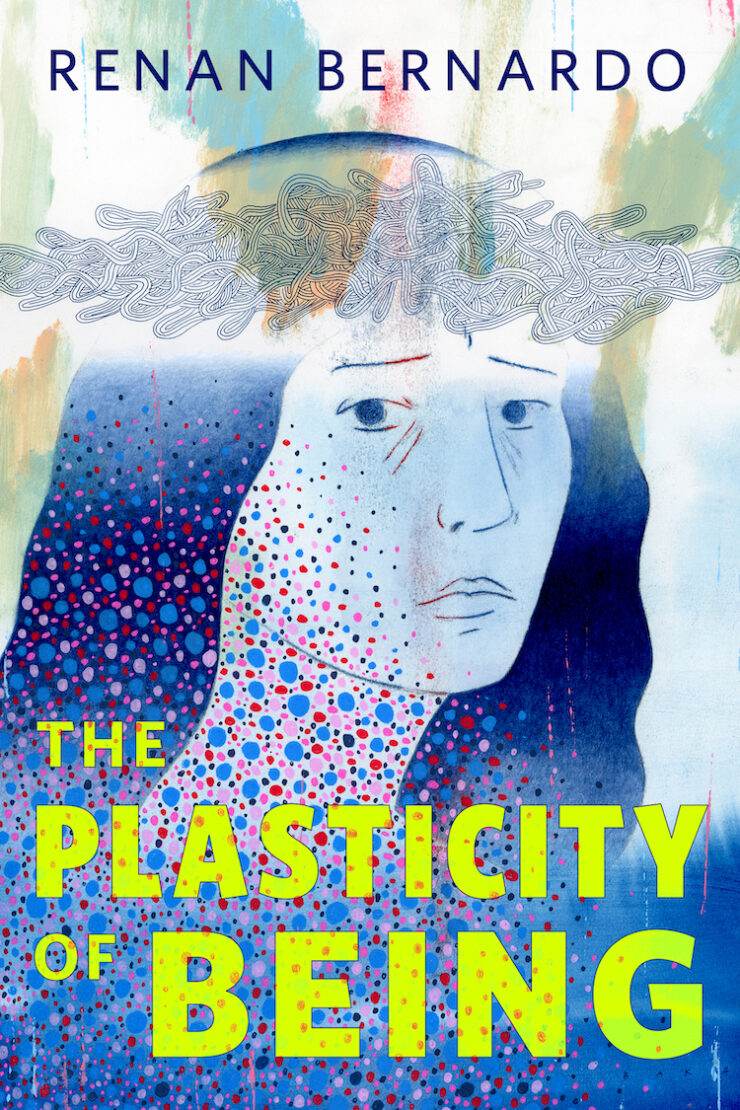
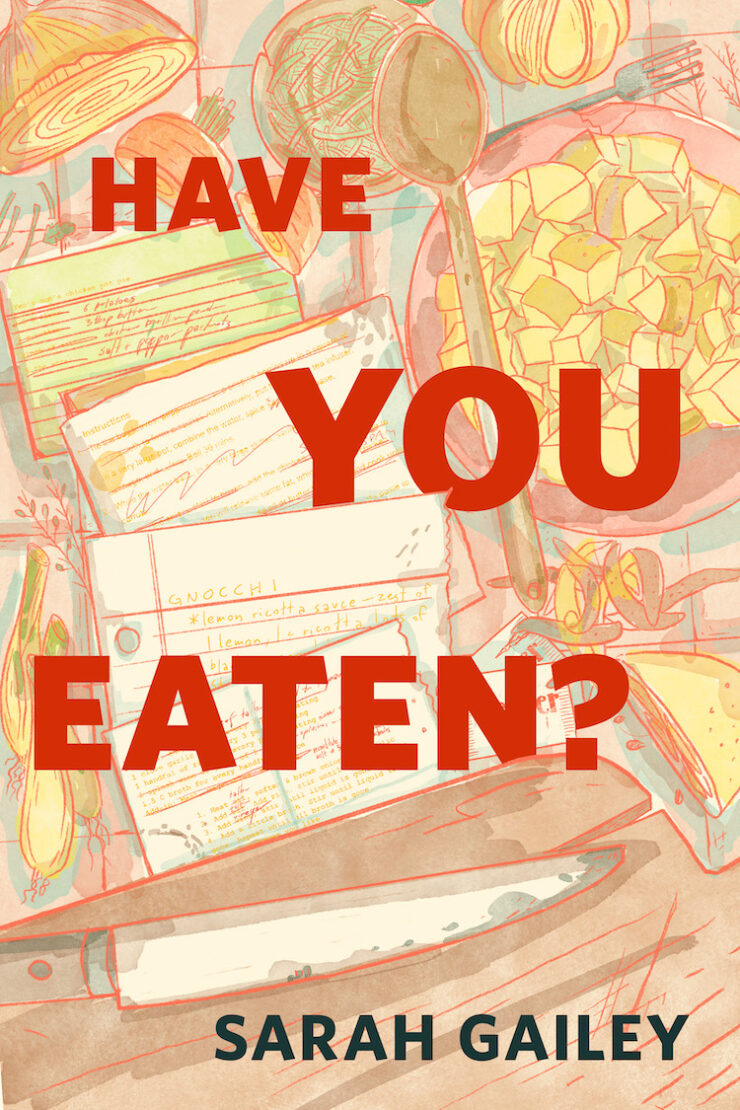
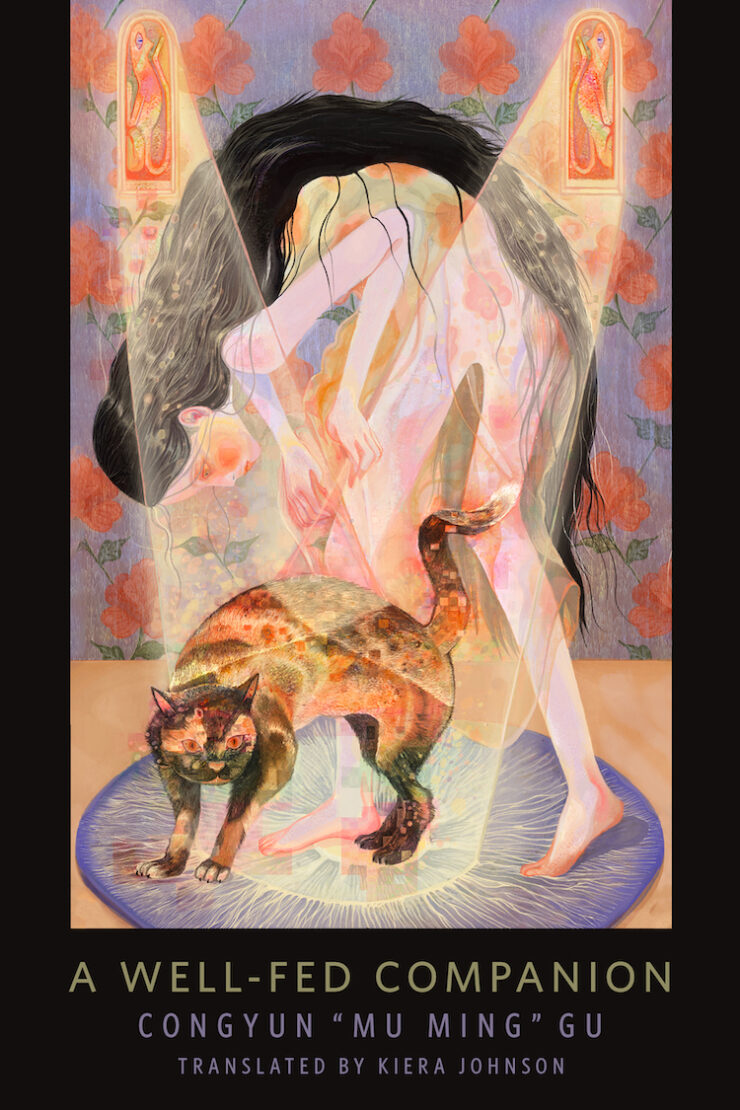
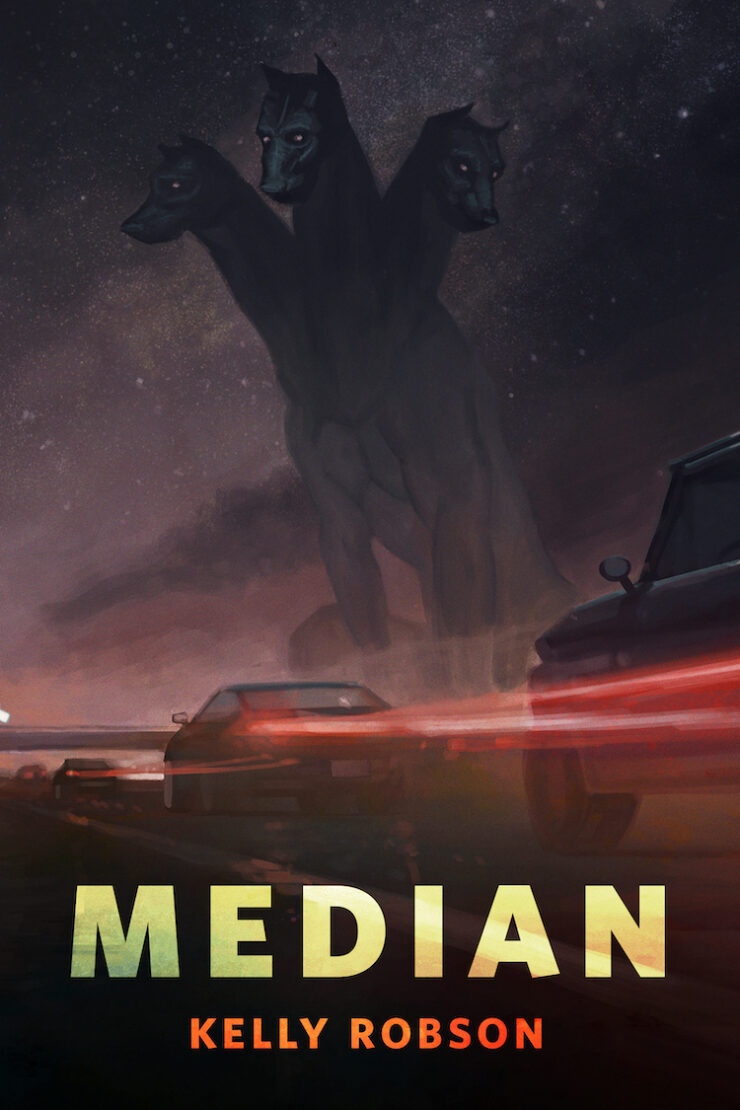
May 23, 2012 Legacy Lost Anna Banks Gaining her was just as hard as losing her. May 16, 2012 Dress Your Marines in White Emmy Laybourne Murder in powdered form. What a life. May 9, 2012 About Fairies Pat Murphy Some things happen whether or not you clap your hands. May 3, 2012 At the Foot of the Lighthouse Erin Hoffman I am American. We are all Americans.
From The Blog
May 25, 2012
Five Super Villain Schemes So Crazy They Might Just Be Crazy
Ryan Britt
May 23, 2012
Sleeps With Monsters: Go Thou and Read Mary Gentle
Liz Bourke
May 23, 2012
“Andy Warhol’s One Of US?”: Men In Black 3
Danny Bowes
May 22, 2012
"Still Alive"
John Scalzi and Jonathan Coulton
May 21, 2012
Comic Book Movie Heroine Evolution
Shoshana Kessock
Showing posts by: jo walton click to see jo walton's profile
Tue
May 22 2012 10:00am

Legacies by Alison SinclairWhen I read something I am immediately plunged into the mood of the book, and when I recall a story it’s often the mood, the atmosphere, that stays with me most strongly. Alison Sinclair’s Legacies (1995) is a book with a very unusual atmosphere that’s hard to describe. I sometimes see this sort of thing in terms of shade and colour — Legacies is shadowed but lit with sudden unexpected shafts of red and blue sunlight. It’s as complex and immersive but not as claustrophobic as Cherryh, it’s reminiscent in some ways of Le Guin but with a darker edge.

It’s well named. This is the story of two planets and the legacy of six generations of history, and we are given it in the close up perspective of Lian D’Hallt, who is mentally handicapped and therefore can never in his own culture be considered an adult. He’s a brave choice for a protagonist — aphasic and halting, intuitive as opposed to acute. Through his struggling perceptions we are plunged into three societies — the exiled Burdanian colony to which he belongs, the kinder’el’ein natives of the planet on which he lives, and then the remnant society of devastated Burdania. And they’re all alien — the Burdanians are much more like humans than the kinder’el’ein, and there’s a tendency to assume them human, but the more we see of them the more we learn that they are not. This is a brave choice too.

Sinclair isn’t afraid to take risks here, and the risks pay off for a reader who’s prepared to pay attention — this is an original, immersive, and thought provoking story.

[Read more: no spoilers beyond the first couple of chapters]

Mon
May 21 2012 12:31pm
Excerpt
Jo Walton

Among Others by Jo WaltonPlease enjoy this excerpt from the now Nebula Award-winning Among Others, penned by science fiction/fantasy author and Tor.com institution Jo Walton.


May 1st, 1975

The Phurnacite factory in Abercwmboi killed all the trees for two miles around. We’d measured it on the mileometer. It looked like something from the depths of hell, black and looming with chimneys of flame, reflected in a dark pool that killed any bird or animal that drank from it. The smell was beyond description. We always wound up the car windows as tight as tight when we had to pass it, and tried to hold our breath, but Grampar said nobody could hold their breath that long, and he was right. There was sulphur in that smell, which was a hell chemical as everyone knew, and other, worse things, hot unnamable metals and rotten eggs.

My sister and I called it Mordor, and we’d never been there on our own before. We were ten years old. Even so, big as we were, as soon as we got off the bus and started looking at it we started holding hands.

[Read more]

Thu
May 17 2012 1:00pm

Rothfuss Reread: Pat Answers the Admissions Questions

Welcome to the last post of the Patrick Rothfuss re-read in which we’ve gone through all of The Wise Man’s Fear and The Name of the Wind with lots and lots of attention and speculation.

A couple of weeks ago I asked everyone to ask Pat questions without spoilers, and we asked a ridiculous number of questions and I split them into the different schools of the University and he has answered... lots and lots of them. And there are some really exciting answers — well, answers that I’m really excited about. Well done everyone who had a question picked!

The first part of this “admissions interview” is being posted on his blog, and the second part is here, below the cut. (I’m going to be on a train all day tomorrow, heading south to the Nebulas, so that link is just to his blog generally for now. When I have internet again and the interview is posted, I’ll edit and link directly to it.) [Update: The link now goes directly to part one of the interview.]

[Read more: Artificing, History, Medica, Chemistry, Rhetoric, Arithmetic]

Fri
May 11 2012 11:00am

The Corridors of Time by Poul AndersonPoul Anderson really was an amazing writer. It’s good to be reminded of that by reading something relatively unfamiliar, because I’m much too close to most of his best books to be able to see them with anything like a fresh eye.

The Corridors of Time is a short novel published in 1966. I was initially disappointed, when I first picked it in 1977, that it wasn’t another Time Patrol book, and then I was delighted that it was what it was. I remember finishing it and thinking “Wow” and reading it again straight through before taking it back to the library. I’m not sure I’ve ever read it in between then and now, I’ve certainly never owned a copy until I picked up this Lancer Books edition (with a truly bad cover, not pictured above), for a dollar in last year’s Worldcon in Reno.

Re-reading it now, I was again struck by how very good it is. It’s a time travel novel in which two groups of time travelers from the future are fighting it out through the timeline, recruiting locals and trying to encourage their philosophies. A twentieth century man is recruited from his prison cell and travels as part of the conflict to the Bronze Age, to the Seventeenth Century and to the future. So far so ordinary, but what makes this extraordinary is the subtlety. “Evil is good turned cancerous,” one of the characters says, and Anderson sees the good and evil of both sides in this time war. It’s also beautifully written — Anderson’s best writing reaches an almost mythic level.

[Read more: no spoilers]

Thu
May 10 2012 1:00pm

Welcome to the last of the speculative summaries of my no moon left unturned reread of Patrick Rothfuss’s Kingkiller Chronicles. This post is about the things we think we know, and it contains extensive spoilers for all of The Wise Man’s Fear and The Name of the Wind — these discussions assume you’ve read all of both books. This posts are full of spoilers, please don’t venture beyond the cut unless you want them. 

[Read more: moons and Junes and spoilers]

Thu
May 3 2012 1:00pm

The Patrick Rothfuss reread on Tor.comWelcome to my insanely detailed reread of Patrick Rothfuss’s Kingkiller Chronicles. This week’s post covers chapters 147 to the end of The Wise Man’s Fear but also contains extensive spoilers for the whole book and the whole of The Name of the Wind — these discussions assume you’ve read all of both books. These posts are full of spoilers, please don’t venture beyond the cut unless you want them.

[Read more: spoilers and speculations, the rest is silence]

Thu
Apr 26 2012 1:00pm

Welcome to my reread of Patrick Rothfuss’s Kingkiller Chronicles. This week we’re doing something different. We’ve nearly finished going through the book in insane detail, just one more post to go, which will be next week. But to finish the series, I’m going to do an email interview with Pat, which will be posted in two weeks. And you can have input into the questions.

Behind the cut will be spoilers for all of The Wise Man’s Fear and The Name of the Wind.

[Read more: spoilers, speculations, candles, rings, boxes, and why is flame blue?]

Wed
Apr 25 2012 1:00pm

I recently read and really thoroughly enjoyed C.J. Cherryh’s latest book in the Atevi series, Intruder. It’s book thirteen in the series, and I’m not actually sure it’s a book at all. It would be an impossible place to start reading, and it would little sense to a new reader — this is a very complex world and a lot of things have happened in the previous twelve volumes. But more than that, excellent as Intruder is, it’s not complete in any sense. It has a beginning and a middle and an end, sort of, but it’s not only looking back to the previous volumes it’s also reaching forward to forthcoming volumes. A lot of this book is set-up for what’s coming. It has plot, but it’s not the plot of this book so much as it’s some plot as part of a much wider arc. The first six books of this series are self-enclosed, they have volume-completion. Subsequent to that what you’ve got is not so much a book as a chunk of an ongoing story that fits conveniently between covers.

Thinking about this led me to thinking about another book I thoroughly enjoyed but which is much more a chunk than a novel, George R.R. Martin’s A Dance With Dragons. And this led me to think about series again.

[Read more: Series classification revisited]

Sun
Apr 22 2012 12:00pm
Reprint
Jo Walton

Jo Walton photo by John W. MacDonaldTor.com is celebrating National Poetry Month by featuring science fiction and fantasy poetry from a variety of SFF authors. You’ll find classic works, hidden gems, and new commissions featured on the site throughout the month. Bookmark the Poetry Month index for easy reading.

This Sunday we’re featuring a poem by Jo Walton, “Jane Austen Among the Women,” originally published in the author’s LiveJournal here.

[Read “Jane Austen Among the Women”]

Thu
Apr 19 2012 1:00pm

The Patrick Rothfuss Reread on Tor.comWelcome to my no moon left unturned reread of Patrick Rothfuss’s Kingkiller Chronicles. This week’s post covers chapters 143-146 of The Wise Man’s Fear but also contains extensive spoilers for the whole book and the whole of The Name of the Wind — these discussions assume you’ve read all of both books. These posts are full of spoilers, please don’t venture beyond the cut unless you want them.   

[Read more: spoilers, speculations, and back to the frame]

Wed
Apr 18 2012 9:00am

The Gate to Women’s Country by Sheri S. TepperThe Gate to Women’s Country (1988) is post-apocalyptic SF about gender roles. It’s probably the best book in the subgenre of SF where the women live in civilized cities and the nasty rough men live outside. I talked about my problems with this kind of eighties feminist SF in my post on Native Tongue:

[Books like this are] taking the position that women and men are like cats and dogs who live together uneasily. These are all eighties books, and I think they were all written in reaction to and in dialogue with not just second wave feminism in general but Joanna Russ’s The Female Man (post) in specific, and I think there’s a way in which they’re all picking at the wrong end of The Female Man. The Female Man and The Left Hand of Darkness (post) both ask what worlds would be like if everyone was human and there was only one gender. Because Russ did that by killing off all the men, these eighties books write about men and women as different species, as natural enemies.

The Gate to Women’s Country is an effective distillation of the memes of this subgenre, and it’s a good story. It’s centrally a story about people, which is what keeps me reading, but it’s also playing with some very odd ideas about what people are, and especially what men are and what is possible for them. It constantly teeters on the edge of caricature but always stays on the right side, largely because in this novel Tepper appears to have empathy for her male characters. She gives us a set of conflicted characters in a world where the dice are loaded against them, characters who are constrained by the world they live in to be the people they are.  And she puts them in a story that leads you through — there’s a kind of story where there are questions raised and you want to keep reading to find out the answers to those questions. When you re-read a story like that knowing the answers it’s a very different experience. Some books don’t hold up at all, others develop more resonance. This is one of the latter.

[Read more: no spoilers yet and no plot spoilers at all]

Mon
Apr 16 2012 4:00pm

The thing that best sums up the experience of reading David Graeber’s Debt: The First Five Thousand Years is something that isn’t really in the book at all. I’ve mentioned here before that it’s my habit to read at night until I am asleep and then put the book down and take off my glasses and turn off the light. I did this one night while reading Debt, and the last couple of pages I read (while actually asleep) were about two races of aliens with really different ideas about debt and obligations, and how this affected their relationships with each other and with humanity. Needless to say, in the morning it turned out that these pages had disappeared, but it made the book only very slightly less science fictional.

Graeber is an anthropolologist and social activist, and he wrote Debt in an attempt to look at historical economies and ideas about debt and what people owe and to whom. To do this, he examines the whole planet across the whole of recorded civilization. It’s a fascinating journey, and full of strange customs and beliefs and re-examinations of familiar ones. Who would have guessed that there are people for whom saying “Thank you” is an insult because it suggests that you might not have done it? Who could have imagined the Tiv people and their terrifying beliefs about magical cannibalism? This is one of those books where you want to read bits aloud to everyone around you.

[Read more]

Mon
Apr 16 2012 1:30pm

Aristoi by Walter Jon Williams in ebookThere are some books that I always buy whenever I find a copy, because I know that somebody will want one. Walter Jon Williams’s Aristoi has been one of those. I wrote about it here in May last year. I said:

It’s about the possibilities opened up when we aren’t limited to the human mind. Aristoi posits nanotech, in-brain implants, virtual realities, and techniques of advanced consciousness creating sub-personalities who can operate independently, daimones. The world — worlds, for though Earth was destroyed by runaway “mataglap” nano, there are now lots of other terraformed and colonized worlds — is divided into the demos, ordinary people, the Therapontes, those who aspire to become Aristoi, and the Aristoi themselves, the best and brightest among humanity, rulers of worlds, makers of laws, controllers of nanotech. They rule their domains absolutely, but immigration between domains is free, so the odder ones tend to lose population.

Many people said they wanted to read it, so I’m delighted to see that it’s now available as an e-book. I think Aristoi is one of the most impressive books by one of science fiction’s best writers. It’s also one of those science fiction books that’s really pushing the boundaries of what it’s possible to do in the genre — as much now as in 1991.

[Read more]

Thu
Apr 12 2012 1:00pm

Welcome to my wildly detailed reread of Patrick Rothfuss’s Kingkiller Chronicles. This week’s post covers chapters 138-143 of The Wise Man’s Fear but also contains extensive spoilers for the whole book and the whole of The Name of the Wind — these discussions assume you’ve read all of both books. These posts are full of spoilers, please don’t venture beyond the cut unless you want them.    

[Read more: spoilers, speculations and stories and stuff]

Wed
Apr 11 2012 3:00pm

Pegasus by Robin McKinleyI’ve been a fan of McKinley’s for some time, but I was disappointed by her last two novels so I didn’t rush for Pegasus (2010) when it came out. It was a talking flying pony book, after all, and early reviews pointed out that it was half a book and did not resolve. I was glad I knew that because it is true — this is not a complete story, and this is the first time that I can think of that McKinley has done this. There will be a sequel. Good. I’ll be buying it. Because, while it is absolutely true that this is a talking flying pony book with a perfect princess who is the only one who can really talk to the pegasi, it’s also surprisingly fun. Fortunately, I’m not one to dismiss a book unconsidered because horses talk.

[Read more: no spoilers beyond back cover]

Sun
Apr 8 2012 12:00pm
Reprint
Jo Walton

Jo Walton photo by John W. MacDonaldTor.com is celebrating National Poetry Month by featuring science fiction and fantasy poetry from a variety of SFF authors. You’ll find classic works, hidden gems, and new commissions featured on the site throughout the month. Bookmark the Poetry Month index for easy reading.

On this Easter Sunday we display a decidedly un-Easter-ish poem from Jo Walton, “Nemi,” originally published in the author’s LiveJournal here.

[Read “Nemi”]

Fri
Apr 6 2012 11:00am

Shades of Milk & Honey by Mary Robinette KowalMary Robinette Kowal’s Shades of Milk and Honey is a Regency Romance novel set in a Regency that’s just a shade off from ours. It’s a deliberately Austen-esque fantasy on a deliberately small scale. It’s England in the early Nineteenth Century, and accomplished young ladies practice piano playing, sketching, and glamour. Plain Jane has despaired of finding a husband while her beautiful younger sister is always surrounded by beaux. A stranger comes to the village and everything gets turned upside-down — but on the very smallest of scales. Reputations are theatened, but no worlds are at risk. And glamour is ubiquitous but generally insignificant, being used to make a room sweetly scented or have the sound of distant music playing.

[Read more: no spoilers]

Thu
Apr 5 2012 1:00pm

The Patrick Rothfuss Reread on Tor.comWelcome to my ridiculously detailed reread of Patrick Rothfuss’s Kingkiller Chronicles. This week’s post covers chapters 133-137 of The Wise Man’s Fear but also contains extensive spoilers for the whole book and the whole of The Name of the Wind — these discussions assume you’ve read all of both books. These posts are full of spoilers, please don’t venture beyond the cut unless you want them.   

[Read more: spoilers, speculations, travel and timing]

Sun
Apr 1 2012 3:00pm

I’ll admit that when I first heard about Oscar! I wasn’t impressed. “He’s a playwright famous for his bon mots, he’s a grouch who lives in a trash can: they fight crime.” Oscar Wilde (Geoffrey Rush) teaming up with Oscar the Grouch (Carroll Spinney) in a musical? It sounded like a one note joke. But then I heard that Charley Kaufman was writing the script, which seemed promising. It still seemed like Who Framed Roger Rabbit had covered this territory. But I was imagining the songs done as typical Muppet songs and as extraneous to the story. Nobody could possibly have imagined the impact of using Bollywood-style musical numbers in a film like this. But it’s the very surrealism that makes it work, along with Rush and Spinney’s perfect timing.

[Read more: some of us are looking at the stars]

Thu
Mar 29 2012 1:00pm

Welcome to my extremely detailed reread of Patrick Rothfuss’s Kingkiller Chronicles. This week’s post covers chapters 127-132 of The Wise Man’s Fear but also contains extensive spoilers for the whole book and the whole of The Name of the Wind — these discussions assume you’ve read all of both books. These posts are full of spoilers, please don’t venture beyond the cut unless you want them.  

[Read more: spoilers, speculations, interjections and incidents]