













Earlier this month, first-time novelist Mark Teppo asked on his blog. “Where is the 21st Century gonzo pulp?” It made me stop and think. What was he talking about?
You see, Mark had stopped in a bookstore in the middle of nowhere. On his way out, he found an entire bookshelf devoted to pulp novels. Mark was rushed, but he was able to grab London, Bloody London by Michael Avallone.
The book sounds crazy. It features Avallone’s super-spy, Ed Noon (about whom Avallone wrote several dozen novels), who:
“To the casual eye, Ed Noon might have looked like a typical American tourist, wandering through London with his eyes wide open, peering in all directions. But the sights Noon wanted to see didn’t include Big Ben, Carnaby Street, or the swinging sin-spots of Soho. Noon was hunting an aging master scientist, a wizard child prodigy, a queer little man named Malvolio, a sinister secret agent named O’Connell, a super sex-bomb named Christine, a few other assorted lads and lasses with wanton wiles and lethal ways.”
Um, what? That sounds crazy. Now, I’m talking about more than just weird books, I’m talking about gonzo books, which in my mind are different enough from weird books to be considered on their own. Often, gonzo books are weird, but they are always fast-paced. Many of the pulps were gonzo books. Weird books are often from writers who have respectability in the field: Pynchon, Lafferty, Ballard, etc. but gonzo books are often written under pseudonyms or by people who didn’t catch the public’s eye.
If we use film as an entry way for how to think of what I mean as gonzo versus weird, think Miike over Lynch, or Bekmambetov over Jodorowsky. The fast pacing means a lot. Pushing boundaries also means a lot. The...extreme-ness...means a lot, too. Gonzo, to me, is reading sections of the book and shaking my head in disbelief, but because it was so surreal I’m almost lost, and moreover the scene was so big and over-the-top that I can’t believe the author thought of it in the first place.
Aside from just saying “all the pulps were gonzo” and pointing you towards a place like Hang Fire Books to find copies, let me provide a few examples:
Edward Whittemore (Quin’s Shanghai Circus and The Jerusalem Quartet the link provides access to all four books) is a great example of gonzo writing. And he is also a great example of extremely talented writing that was over-shadowed by the over-the-top feeling that suffused most of the text. Other examples include Charles Stross’s Laundry books (The Atrocity Archives and Jennifer Morgue) and Tim Power’s Declare although Declare isn’t as fast-paced as the other examples. And there are more; Iain Sinclair, Michael Avallone, and even some R. A. Lafferty.
Philip K. Dick and Steve Aylett are almost right, but their writing tends to be slower-paced than what I’m thinking of when I think gonzo writing. Someone like Charlie Huston carries the atmosphere of gonzo, but isn’t strange enough to make the cut. So, Stross aside, who’s writing this type of fiction today? This type of writing was once big business, has it gone the way of the dodo? I suspect the general exploitiveness and misogyny of the work killed it off as we got through the 1970s. But I think it’s due for an update.
Anyone out there writing and publishing this stuff? You’ve got a customer.
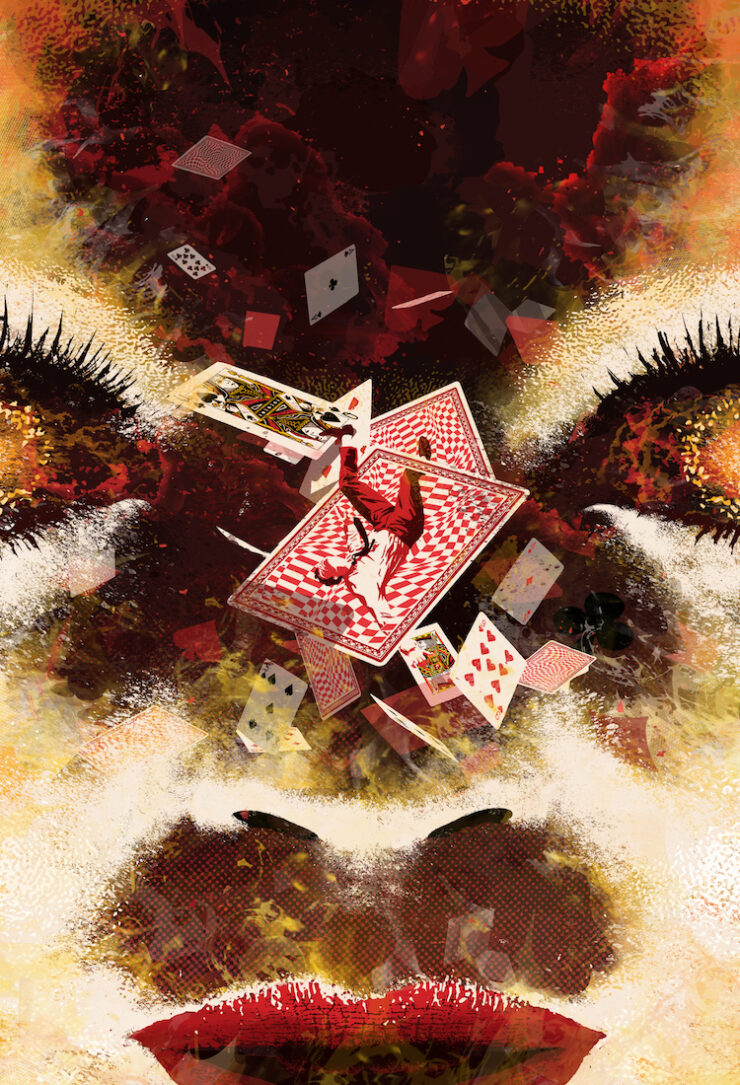
[Image from Flickr user net_efekt; CC licensed for commercial use]
VIEW ALL BY · Wednesday August 27, 2008 03:31pm EDT
Wednesday August 27, 2008 03:32pm EDT
Wednesday August 27, 2008 03:33pm EDT
VIEW ALL BY · Wednesday August 27, 2008 03:42pm EDT
Thanks for the reminder people!
VIEW ALL BY · Wednesday August 27, 2008 03:54pm EDT
VIEW ALL BY · Wednesday August 27, 2008 04:20pm EDT
VIEW ALL BY · Wednesday August 27, 2008 04:34pm EDT
VIEW ALL BY · Wednesday August 27, 2008 04:46pm EDT
VIEW ALL BY · Wednesday August 27, 2008 04:55pm EDT
Ellis' Crooked Little Vein: yes.
The question I'm still trying to find an answer to is if these types of books are gonzo because they are non-genre books that adopt genre-style trappings (the SFnal flourishes on the spy novel, the fantastic permeating the historical book), then were does genre go to get its gonzo? Rudy Rucker's fridge?
Wednesday August 27, 2008 06:40pm EDT
Stephen Hunt's Court of the Air? (This is perhaps more glorying in the pulp than the gonzo per se.)
VIEW ALL BY · Wednesday August 27, 2008 09:40pm EDT
How about Joe Lansdale? Stuff like Zeppelins West and Flaming London surely qualify.
VIEW ALL BY · Thursday August 28, 2008 09:16am EDT
Thursday August 28, 2008 11:31am EDT
The Jerusalem Quartet fascinate me because,among other things, they do such a lovely descent of mode from the demented beginning of Sinai Tapestry to the almost Spy who Came in from the Cold feel of some of Jericho Mosaic.
Charlie Huston has the feel for me, though if one wanted gonzo in urban fantasy Zielinski's Bad Magic would be right at the top of my list.
Also, though 21st century it isn't on several levels, The Invisibles seems to fit right in the middle of this definition.
VIEW ALL BY · Friday August 29, 2008 04:11am EDT
VIEW ALL BY · Friday August 29, 2008 08:31am EDT
@14 I definitely would consider the Cornelius books as gonzo. And they're of the right time period, too.
And I completely forgot to mention Steven Erikson's forthcoming REVOLVO from PS Publishing: the modern art world, train-jumping hobos, people transforming into insects, a murderous cro-magnon, octopoids, and more. It's, as the kids say, off the hook.
Check it out here
Monday September 01, 2008 03:27pm EDT