












To help get a fresh perspective on The Lord of the Rings during the re-read, Iâm also reading and blogging the occasional critical work. Some time ago, I read a paper by John Garth, âFrodo and the Great War,â but saved it for now, when it begins to be most relevant. Garth uses literary works by other WWI veterans and reports of war correspondents to find parallels to LotRâs characters, themes, and landscapes. My knowledge of WWI is pretty much limited to white-knowledge history, Dorothy L. Sayersâ novels, Rilla of Ingleside, and a few poems, but Garthâs textual arguments seem well-supported to me and illuminate the pervasive effect of WWI on the book.
Garth starts by discussing heroism and soldiering. WWI resulted in a new depiction of soldiers as passive sufferers, and LotR contrasts this with the more traditional epic heroism of the larger-than-life characters (compare Aragorn, Legolas, and Gimliâs race after the Uruk-hai, to Frodo and Samâs painful plodding across Mordor). Frodoâs heroism is in, first, âtaking on an outsized burden for the common good,â and second, âdiscover(ing) unlooked-for endurance and courage; or, as a soldier might have said approvingly in 1916, âgritâ and âpluck.ââ
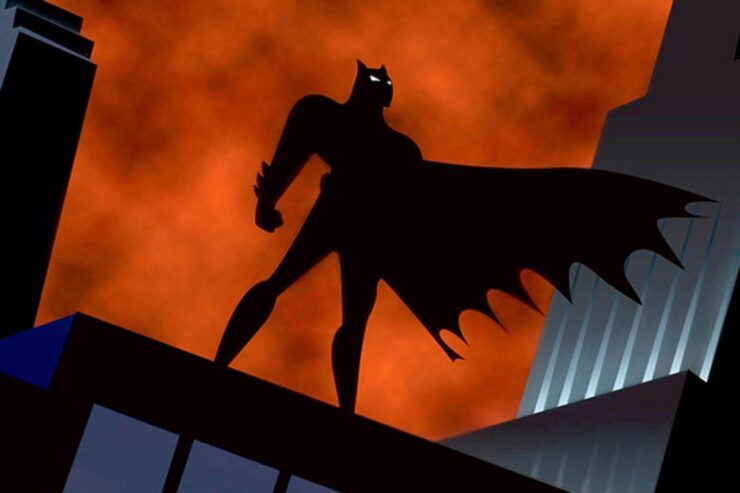
The relationship of Frodo and Sam is also drawn from the experience of WWI soldiers, specifically the officer and servant (âbatman,â and is there any way to distinguish that aloud from Bruce Wayneâs alter ego? I briefly puzzled Chad exceedingly when talking about this over dinner.). Tolkien wrote in a letter, âMy Sam Gamgee is indeed a reflexion of the English solider, of the privates and batmen I know in the 1914 war, and recognized as so far superior to myself.â At the start, class and social barriers divide them; but, according to Garth, âTolkien maps the gradual breakdown of restraint until Sam can take Frodo into his arms and call him âMr Frodo, my dear.ââ In addition, their hierarchy inverts, with Sam turning into the leader, which is also modeled on experience; C.S. Lewis said that his sergeant, who was the one who actually knew what he was doing, turned their âridiculous and painful relationship into someting beautiful, became to me almost like a father.â
Garth argues that Frodoâs later experiences also parallel those of WWI soldiers. For instance, Frodo experiences something like âshell shock,â which often came with insomnia, nightmares, and changes in sensory perception. He comes home physically and mentally scarred, and is ignored by the civilians who canât comprehend the new reality of war. He also experiences what Tolkien called âunreasoning self-reproach: he saw himself and all that he (had) done as a broken failure,â something other WWI officers felt after their losses. Garth calls Frodoâs subsequent departure to the Grey Havens âa piece of wish-fulfillment . . . . something akin to the fairy-story flight from reality that Tolkien has so far eschewed.â However, Garth argues that this voyageâs âundeniable poignancy resides, paradoxically, in our very knowledge that such âcompleted peaceâ is impossible in this life.â
(I am not sure what I think about this argument. My first reaction is resistance, but I think I need to wait until we get there to really decide. However, it is an interesting contrast to the reaction that sees Frodoâs departure as absolutely heartbreaking.)
The NazgĂ»l, according to Garth, are another set of characters influenced by WWI. He quotes Tolkienâs children as saying that the battlefield âfogs and smokesâ made the German horses appear natural, while their riders did not. Further, gas helmets obscured the face and caused breath to snuffle and speech to hiss, while the description of the NazgĂ»lâs cry is similar to that of artillery shells in flight.
Gas helmets, specifically the view through them, might also have influenced Tolkienâs descriptions of the Dead Marshes, in which corpses are seen âas if through âsome window, glazed with grimy glass.ââ The Dead Marshes also reflect how âthe ubiquitous deadâ of the Western Front âwere strangely captivating reminders of (soldiersâ) own fragile mortalityâ; Garth gives examples of soldiersâ morbid fascination with corpses. And, to go back in the book a ways, he suggests that the surreal scene in the Barrow-downs, particularly the green light, may have been influenced by gas attacks.
Finally for here (I have reordered topics for purposes of this summary), Garth quotes Tolkien as describing trench warfare in two words: âanimal horror.â Garth uses this to discuss how âalways the miasmic clouds of fear in The Lord of the Rings force people down towards the level of beastsââparticularly Gollum, who Garth further links to a Somme myth about half-insane deserters who live underground past a certain point in the trenches.
This last point was the one that most interested me. The other comments were interesting but either things Iâd already recognized (Sam as Bunter, Frodoâs trauma) or more in the line of triviaânice to know but not giving a substantial insight into the book. But the point about beasts immediately resonated in the âoh, of course!â way of good criticism for me, crystallizing something I knew but hadnât articulated.
This paper was published in The Lord of the Rings, 1954-2004: Scholarship in Honor of Richard E. Blackwelder, ed. Wayne G. Hammond and Christina Scull, Marquette University Press, 2006. Garth also has a book titled Tolkien and the Great War; the change in noun is highly indicative, as the book is much more biography than literary criticism. I got it out of the library, started reading it, and realized that I am not actually that interested in biography, so I canât say anything useful about it.
« Two Towers IV.1 | Index | Two Towers IV.2 »
Kate Nepveu is, among other things, an appellate lawyer, a spouse and parent, and a woman of Asian ancestry. She also writes at her LiveJournal and booklog.
Friday September 25, 2009 10:18am EDT
As for Frodo's departure, I think the idea of the "completed peace" and heartbreak are entirely reconcilable. From Tolkien's religious point of view, the person departing -- Frodo or the shellshocked former soldier -- is going to a better place where he can at last find peace, no longer troubled by the PTSD that has made his life hell. For those left behind -- Sam or the relatives of the deceased -- it is heartbreaking.
Friday September 25, 2009 01:27pm EDT
In WW1, I doubt there were many country-bumpkin types who in fact got to stand at the shoulders of the powerful and make important decisions and take important actions that changed the course of history, as the hobbits did. But in some metaphorical sense, that's what every footsoldier was being asked to do.
VIEW ALL BY · Friday September 25, 2009 02:29pm EDT
WW1 had a massive impact on the writings that followed it. How could it not? The resonances are undeniable.
DemetriosX @1:
Agreed. It is a poignant bitter-sweet moment when Frodo departs. I'm aware of a number of accounts of war veterans who have refused to speak of their experiences, not wanting to revisit the horrors or to taint the inocence of family members who stayed home.
In recent years, the surviving veterans, who number fewer by the year, have been more willing to share their experiences. This has been evident in recent ANZAC Day commemorations in New Zealand and Australia.
Friday September 25, 2009 02:53pm EDT
World War II seemed to have gotten in there as well. After all, the events of Lord of the Rings were presented as a kind of second major war, growing out of a previous one, in which a centralized evil force had initiated the war and could actually take over the equivalent of England itself. That's much closer to an experience of the Second World War, where Nazi Germany really could have won, and would have occupied all of Europe if it had won, than of the First World War. The latter began in a spirit of optimism on both sides that war would be easy, quick, and to their favor, and everyone was so prepared for it to happen that they ended up blundering into it. The major powers ended up pounding themselves into bloody exhaustion for no reason that anyone could name any longer, and it was so obviously pointless that afterwards one couldn't use the word "glory" without being ironic. The stakes were very different.
Friday September 25, 2009 03:31pm EDT
Garth's book, besides being largely biographical, is in Tolkien's works largely concerned with "The Book of Lost Tales" and some early poetry, which are not what Tolkien's name means to the average LOTR reader. However, I know the book has been read with appreciation by people not all that familiar with Tolkien's rarer works.
Friday September 25, 2009 03:44pm EDT
In the foreword to the second edition, which is where he says it, he points out that he personally was influenced more by the First World War than the Second. And that much of the destruction depicted in LOTR was actually inspired by creeping urbanization in his childhood. When he was a boy, he pointed out, he had never seen an automobile. (And for his entire professional academic career, the 1920s-50s, keeping Oxford from being paralyzed and made uninhabitable by the din of traffic was a hot local political issue. That sort of thing meant a lot more to Tolkien, emotionally, than some war in France.)
Tolkien also says that the ways in which personal experience affect an author's work are extraordinarily complex, and strongly objects to self-confident "this inspired that" source analysis. If you just want to note the similarities of fiction to reality, however, he has no objection.
VIEW ALL BY · Friday September 25, 2009 05:42pm EDT
VIEW ALL BY · Saturday September 26, 2009 03:20am EDT
Soldiers are citizens of death's grey land
The evidence has been there all along. Tolkien's work is highly compatible with the War Poets such as Wilfred Owen and Siegfried Sassoon; he just took his time in expressing his views.
Saturday September 26, 2009 11:31am EDT
Tolkien's denials to the contrary, LOTR is an allegory of WWII. There are 3 major powers. A polyglot western alliance representing the powers of good, and 2 powers of evil - Sauron and Saruman. The 2 evil powers are based on mass armies and the equivalent of industrialization. One of the most fantastic elements of LOTR is that Tolkien is presenting an alternative view of WWII. In the real WWII, the powers of good allied themselves with a power of evil and triumph via greater mastery of industrial technologies. In the Middle Earth allegory of WWII, good defeats both evil powers by exercise of traditional heroism and basic decency. Tolkien's distate for many aspects of the modern world is well known and in LOTR he presented a powerful and remarkably well realized alternative vision.
Saturday September 26, 2009 12:31pm EDT
I have noted that there is a tendency in such critical work to overemphasize the idea, or angle, that the author is analyzing at that point - this is not particular to Garth, but also seen in work of professional scholars such as Shippy, Flieger, Chance and others. In this case, I am a bit sceptical towards the pervasiveness of the influence of Tolkien's WWI experiences; not, mind, whether there are influences, because these are not only obvious, but Tolkien also admitted to some of them, but I think Garth goes to far in trying to tie Frodo up in WWI references. On the parallel issue of the Ring as an allegory for something, Tolkien wrote:
I don't doubt that some of the ressonances that Garth finds is of the same kind -- because war âdoes always so work,â whether you experience it in real life or âfeigns it in a story.â
[#] I posted a review of the book in the Tolkien usenet groups that can be read at Google Groups
Saturday September 26, 2009 02:04pm EDT
Sunday September 27, 2009 01:10pm EDT
Johnny99@11: Absolutely agreed. I grew up in the 50s, when WWII was still fairly recent, and when I read Lord of the Rings later on, I just didn't find it very interesting until partway through The Two Towers. Then I had a feeling of dread that I could only associate with the period when it looked as if the Nazis were winning and it would be unimaginably horrible if they did. That's quite different from saying that Lord of the Rings was meant as an actual allegory for WWII, as you observe. Whatever the outline of the story, I can't imagine living through that time and not being influenced by it.
Too, when WWI ended, it was a fairly common belief that nothing had really been decided and that another major war was inevitable (which is to say, a continuation of the same war, after a breathing spell). There's a lot of precedent for that. It's difficult to think what it must have been like for an ex-soldier to live with that and see it all starting again, and in a hideously evil way.
VIEW ALL BY · Wednesday September 30, 2009 12:30pm EDT
DemetriosX @ #1, I didn't mean the different views of the ending were irreconciliable, just interesting to contrast their focuses.
Peter Rabbit @ #7, I didn't know what was how you pronounced Bunter-type "batman"--thanks muchly.
Roger Albin @ #9, I don't think that Garth was trying to say Frodo was just a passive sufferer, but that the idea that you would depict *any* participants in a war as passive sufferers was new to WWI and likely informed Tolkien's portrayal of Frodo. It works _with_ the inverted structure, as you quite rightly point out, not in place of it.
Troels Forchhammer @ #10, thanks for your link. I've been saving the two essays on class & hierarchy for Book V. I posted about Flieger's essay previously.