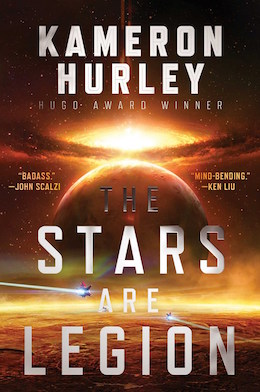
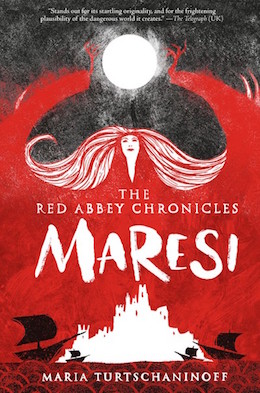
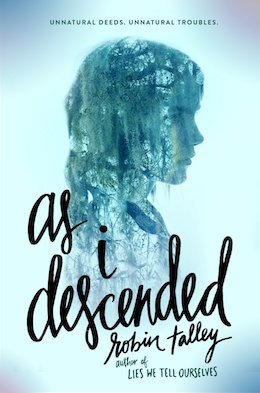
May 15, 2013 The Button Man and the Murder Tree Cherie Priest An all-new Wild Cards story May 14, 2013 Shall We Gather Alex Bledsoe When one world brushes another, asking the right question can be magic… May 8, 2013 Fire Above, Fire Below Garth Nix The dragon below our city has died. What is to be done? May 7, 2013 We Have Always Lived On Mars Cecil Castellucci They've never seen the sky. Or the sun. Or the stars. Or the moons.
From The Blog
May 10, 2013
The Great Gatsby is an Alternate Timeline Where Jack Survived Titanic
Chris Lough
May 7, 2013
Charlaine Harris Says Goodbye to Sookie Stackhouse
Charlaine Harris
May 6, 2013
Grossly Gothic: Doctor Who “The Crimson Horror”
Ryan Britt
May 6, 2013
Your Pal, The Mechanic: Iron Man 3 Spoiler Review
Emily Asher-Perrin
May 4, 2013
Here’s How We Remember Star Wars
Stubby the Rocket
Showing posts tagged: review click to see more stuff tagged with review
Tue
May 14 2013 5:00pm

A Stranger in Olondria cover, Sofia Samatar

For a long time now I have been afraid of Sofia Samatar's fiction. Knowing the effect her poetry has had on me—in Goblin Fruit, in Stone Telling, in Strange Horizons—I have trembled at the thought of allowing her words any deeper purchase on my psyche. Given her ability to incapacitate me with a few well-turned stanzas, what havoc might she wreak with a whole novel?

Through some terrible and wonderful magic, A Stranger in Olondria has anticipated these fears and commented on them. With characteristic wit, poise, and eloquence, Samatar delivers a story about our vulnerability to language and literature, and the simultaneous experience of power and surrender inherent in the acts of writing and reading.

[Read more]

Fri
Apr 26 2013 10:00am

Spin State cover, Chris MoriartyThe first installment of Chris Moriarty’s recently-completed Spin Trilogy, Spin State (2003) was a finalist for the Philip K. Dick, John Campbell, Spectrum and Prometheus Awards—a strong debut, fast-paced, that Nicola Griffith described as “vivid, sexy, and sharply written […] a nonstop, white-knuckle tour of quantum physics, artificial intelligence, and the human heart.” And it’s also—more of a rarity—a hard science fiction novel with a queer woman protagonist.

Spin State introduces Major Catherine Li, a UN Peacekeeper sent to investigate an “accidental” death on her home planet, a mining world that produces the Bose-Einstein condensate that makes quantum entanglement and its benefits—travel, commerce, communication—possible. As one might expect, however, the situation is anything but straightforward; Li is being played against (and by) a variety of actors in the larger political sphere. The answers she finds on Compson’s World could shift the balance of power between the UN and the Syndicates with regard to the control of inhabited space. Li’s own secrets are at risk of discovery, and her relationships to her handlers, associates, and friends—particularly an Emergent AI called Cohen—will determine the outcome.

[A relatively spoiler-free review.]

Wed
Apr 17 2013 5:00pm

Review Unnatural Creatures Neil Gaiman Mari Dahvana HeadleyThe tidal wave of vampires, werewolves, and mermaids that has washed over the publishing industry these last few years has obscured the stranger and subtler pleasures of griffins, unicorns, and even weirder chimerae and unspeakable things with no names. For re-introducing these things, Unnatural Creatures would be a welcome volume by any standard, and it also happens to be, by any objective standard, an excellent anthology. Additionally wonderful is that sales will benefit 826 DC, a non-profit dedicated to developing the writing skills of elementary, middle-school, and high school students. So if you like fantasy fiction, especially about weird mythical creatures, you should check out this volume.

[Read more]

Wed
Apr 10 2013 2:00pm

The Shambling Guide to New York City Mur Lafferty Book ReviewThis review feels a little odd to write. Not because of the book exactly but because of who it is written by. You see, The Shambling Guide to New York City is the mainstream debut of Mur Lafferty. She is the host of, amongst other things, the I Should Be Writing podcast and, at the time of writing, she’s released almost 300 episodes of writing advice. So knowing that, and listening to the podcast, there is this niggling question of can she practice what she preaches?

But talking about how to write a novel doesn’t help you actually write one and sitting in an office doesn’t make you an expert in making a guide to where coterie (monsters to you and me) hang out. And that is one aspect where Mur and her main character Zoë are alike. They are both learning by doing.

[Read more]

Tue
Apr 2 2013 2:30pm

Short Fiction Spotlight Caitlin R. Kiernan An Owomoyela Subterranean Magazine Eclipse OnlineWelcome back to the Short Fiction Spotlight, a space for conversation about recent and not-so-recent short stories. In the last installment, I focused briefly on one of the longest-running print magazines, The Magazine of Fantasy and Science Fiction; this time, I’d like to return to the world of online publications to note a couple of recent stories that caught my eye. The first, Caitlin R. Kiernan’s “The Prayer of Ninety Cats,” appears Subterranean Magazine, a quarterly publication with a strong track record of publishing quality work by well-known authors. The second is another piece from Jonathan Strahan’s Eclipse Online: “In Metal, In Bone” by An Owomoyela.

I’ve discussed works by both of these writers in the past and I do always look forward to seeing new stories by them—but it’s not only confirmation bias at work in my choice of these two pieces out of the others available in recent publications. These are intense stories, stories that do interesting things with prose and structure; their shared ability to creep under the skin is something that I appreciate.

[Onward.]

Tue
Mar 19 2013 2:30pm

Short Fiction Spotlight Magazine of Fantasy and Science Fiction Ken Liu Elizabeth Bourne Mark Bourne Michael ReavesWelcome back to the Short Fiction Spotlight, a space for conversation about recent and not-so-recent short stories. As I’ve paid attention mostly, so far, to magazines that publish electronically, in this installment I’d like to take a look at some stories from the past two issues of The Magazine of Fantasy & Science Fiction (January/February and March/April). Three stories in particular stood out above the rest: Ken Liu’s “A Brief History of the Trans-Pacific Tunnel,” Michael Reaves’s “Code 666,” and “What the Red Oaks Knew” by Elizabeth and Mark Bourne.

These are very different pieces, in terms of tone, arc, and focus. Ken Liu touches on issues of human rights and memory, Michael Reaves give us a scary story with EMTs, and the Bournes offer a tale of vital, elemental forces at work in a world one step away from our own. (There is a pleasant variety available in the stories of F&SF, though more would be better, particularly in terms of authors: while having regulars is certainly fine, and most publications end up with them, it can become a touch repetitive if the same folks appear again and again over a few issues in a row.)

[Onward.]

Wed
Mar 13 2013 1:00pm

Elementary Sherlock Holmes Joan Watson CBS Jonny Lee Miller Lucy Liu

Watson: Any luck?

Holmes: Luck is an offensive, abhorrent concept. The idea that there is a force in the universe tilting events in your favor or against it is ridiculous. Idiots rely on luck.

Watson: So that’d be a no.

Elementary, 1.05, “Lesser Evils”

Let’s be honest. I never understood the Sherlock love. Jeremy Brett will always be the form and image of Holmes for me, and while the Robert Downey Jr. and Jude Watson films are thigh-slapping entertainment, I’ve never managed to watch more than half an hour of Cumberbatch’s Holmes. I’m aware that in these parts of the internet that may make me an aberration....

But Elementary? On the face of it, it’s fairly run-of-the-mill mystery television: the plots range from the somewhat strange to the bafflingly over-complicated: too much murder, not nearly enough fraud and theft and roller derby. So why do I like it? Why, in fact, is it about the only television show I’ve followed, in the latter part of 2012 and the first part of 2013?

[Read more]

Tue
Mar 12 2013 9:00am

Elizabeth Bear Shattered Pillars Eternal Sky Range of Ghosts Fantasy Novel Book ReviewElizabeth Bear’s second Eternal Sky novel, Shattered Pillars, follows directly on the heels of the first, Range of Ghosts (2012). These books are set in a secondary world based loosely on the 12-13th century Asian Steppes and surrounding empires; as noted previously regarding Range of Ghosts, they are epic in scale but personal in detail, focus, and theme, following a small band of characters as they literally shift the skies of their world through war, intrigue, and determination.

At the opening of Shattered Pillars, Re Temur and the Wizard Samarkar are continuing on their journey to rescue Edene—as well as to begin Temur’s war for his kingdom—with their companions, the monk Hsuing and the tiger-woman Hrahima. However, as is revealed at the end of the first novel, Edene has taken a different path into a caustic and ancient power, determined to save herself, her unborn child, and Temur. The wizards of Tsarepheth, too, have their own struggles and devastations to overcome as the reach of the Nameless cult spreads poisonously from empire to empire.

[A review.]

Thu
Mar 7 2013 12:00pm

The Gaslamp Fantastic: Queen Victoria’s Book of Spells edited by Ellen Datlow and Terri WindlingQueen Victoria’s Book of Spells is an anthology of gaslamp fantasy—stories set in or around the world of nineteenth-century Victorian England—edited by the ever-dynamic Ellen Datlow and Terri Windling. The contributor’s list is full of familiar names: Delia Sherman, Elizabeth Bear, Theodora Goss, Ellen Kushner and Caroline Stevermer, Catherynne M. Valente, Jane Yolen, and so on. Many of these authors have previously written fantasies of manners or neo-Victorian stories; others visit the topic with fresh eyes.

The stories themselves touch a variety of genres and themes, from a contemporary academic fantasy to metafictional riffs on classic Victorian novels (and, of course, a light smattering of stories that might otherwise be considered “steampunk”). Several, also, offer critical portraits of the people within Britain who weren’t (and aren’t) often allowed their own words or stories: servants, wage laborers, and the people upon whose backs the glossy Victorian façade was built.

[A review.]

Tue
Feb 19 2013 3:30pm

Short Fiction Spotlight: Apex #45Welcome back to the Short Fiction Spotlight, a space for conversation about recent and not-so-recent short stories. This time around, rather than picking out various stories from here and there, I’ll be talking about a single issue of a magazine: Apex #45, edited by Lynne M. Thomas, freshly released for February. The reason? It’s a Shakespeare theme issue. I have a series of feelings about and investments in the work of William Shakespeare—it’s sort of unavoidable as a member of an English department—and the concept of various authors writing speculative pastiches and other tales set in the worlds of Hamlet or Macbeth is, shall we say, seductive.

There are four stories in the issue (in addition to an essay by Sarah Monette and an interview with Kate Elliot): “Mad Hamlet’s Mother” by Patricia C. Wrede, “Zebulon Vance Sings the Alphabet Songs of Love” by Merrie Haskell, “The Face of Heaven So Fine” by Kat Howard, and “My Voice is in my Sword” by Kate Elliott. The last is a reprint from 1994’s Weird Tales from Shakespeare, edited by Katharine Kerr and Martin H. Greenberg.

[Onward.]

Fri
Jan 25 2013 3:00pm

Doesn’t Come with a How-To Manual: Blood Oranges by Kathleen TierneyThe flap copy of Blood Oranges, the first novel by Caitlin R. Kiernan writing as Kathleen Tierney, reads like the copy for a fistful of other contemporary paranormal novels—if they had been put through a refracting lens and reduced to their component parts, pointing up the ridiculousness imbricated in their very terms. Siobhan Quinn, our protagonist and narrator, is a junky and an at-first-accidental “demon hunter” who gets bitten by a werewolf and a vampire in the same night; her life doesn’t really pick up from there.

Blood Oranges is a strange (and unmistakably fun) project, a parodic urban fantasy that at once vivisects the tropes of the genre as it currently stands and also employs them with vigor and a backhanded, wild immersion. Kiernan has described the trilogy that Blood Oranges begins as a sort of pause—between The Drowning Girl and the next Kiernan project, there are these books, by “Kathleen Tierney.” This is not a useless description; in fact, it makes a great deal of sense, because this is quite firmly not a Kiernan story, though Quinn’s opinions on her own genre frequently reflect those of her creator. The introductory author’s note makes that hilariously obvious.

[A review.]

Tue
Jan 8 2013 3:00pm

Arguments: The Unreal and the Real, Volume Two: Outer Space, Inner Lands by Ursula K. Le GuinSpanning two volumes, The Unreal and the Real: Selected Stories of Ursula Le Guin is the first major retrospective collection of Le Guin’s short fiction—something that’s been a long time coming, considering her significant contributions to the world of American letters. These volumes, Where on Earth and Outer Space, Inner Lands, have been arranged by Le Guin and are published in handsome hardcover editions by Small Beer Press (who make very lovely books, and have done so again this time around). Both volumes were released in late November, and all-together they collect nearly forty stories from across Le Guin’s expansive career.

As noted in the prior post, the second volume, Outer Space, Inner Lands, shifts the focus of Le Guin’s selected stories to her “fantastic” works—again, as the flap copy says—those stories that might be called science fiction and/or fantasy. Of course, those sorts of genre categorizations are essentially arbitrary; this volume’s introduction makes a sharp point of that, and in closing rhetorically asks us to decide “which volume of these two is the Real and which is the Unreal.” In more definite terms, this is the volume full of award-winning and critically renowned stuff: “The Ones Who Walk Away from Omelas,” “Nine Lives,” “The Matter of Seggri,” “Solitude,” etc.

[A discussion.]

Fri
Dec 14 2012 5:00pm

Cyberpunk is the New Retro: Rosa Montero’s Tears in RainRetro-futurism is usually associated with the likes of Hugo Gernsback’s stories and the streamlined cars and idealized cities of Norman Bel Geddes. But given the way nostalgia works, it seemed inevitable that the backward-looking retro-future lens would shift its focus from the Thirties and Fifties to more recent science fiction. Having apparently skipped the Seventies altogether (unless you count the attenuation of the Star Wars franchise), we’re now looking back to the Eighties and to cyberpunk, as in Rosa Montero’s Tears In Rain.

To say that it wears its Blade Runner influence on its sleeve is an understatement; almost anyone reading this review will recognize that the title is derived from Roy Batty’s famous dying words. That scene itself is quoted verbatim when the heroine recalls how a friend showed her the “old, mythical film from the twentieth century in which replicants first made an appearance”, and the “technohumans” of 2109 are referred to colloquially as “replicants” or “reps.”

[Read more]

Fri
Nov 30 2012 3:30pm

A book review of Jagannath by Karin Tidbeck Swedish writer Karin Tidbeck’s first collection published in English, Jagannath, has recently been released by Cheeky Frawg, an imprint run by Ann and Jeff VanderMeer that focuses on translations and international fiction. The collection contains thirteen pieces of short fiction that range from whimsical to intensely discomfiting, all having a distinct touch of the surreal or the weird. Many of the pieces in question have never previously been published with English translations—though, of course, some were originally published in magazines like Weird Tales.

Jagannath has already received a great deal of word-of-mouth support from folks like China Mieville, Ursula K. Le Guin, Karen Lord, and Karen Joy Fowler, and has been reviewed quite favorably by Stefan Raets here on Tor.com. Tidbeck’s fiction is also acclaimed in her home country. As a fan of international fiction and someone interested in inclusivity in the speculative fiction community, I was particularly pleased to get my hands on this book, and it doesn’t disappoint.

[A review.]

Fri
Nov 30 2012 1:00pm

The Sharp Edge: A review of Elizabeth Bear’s new short story collection Shoggoths in BloomShoggoths in Bloom is the second collection of short fiction by award-winning author Elizabeth Bear, following 2006’s The Chains That You Refuse. The pieces included are predominantly reprints, from 2006 forward, spanning several of Bear’s recent stand-outs—such as Hugo-winning stories “Shoggoths in Bloom” and “Tideline”—as well as one piece original to the collection, “The Death of Terrestrial Radio.” There is also an introduction by Scott Lynch.

It is no grand secret that that I find Bear’s fiction provocative and engaging. Her work tends to speak to the things that I find most interesting in fiction: the sharp edges of people, situations, and issues as large (and small) as the problem of existence. The pieces collected in Shoggoths in Bloom are all in some way implicated in this exploration of the hard parts of living but in remarkably different ways. This collection is both a study in contrasts and a study in unity; the threads that run throughout Bear’s fiction are present, and so are the significant differences from story to story.

[A review.]

Tue
Sep 18 2012 4:00pm

A review of Adaptation by Malinda LoMalinda Lo’s newest book, Adaptation, is a step away from her usual fare: it’s a young adult science fiction novel set in the near future. As the story begins, Reese Holloway and her debate partner David Li are waiting for a flight back home from a championship with their coach when planes start mysteriously crashing all over North America, due to flocks of birds striking them. As they try to make their way home in a rental car, the nation goes into upheaval; rioting, looting, and murder abound. However, at night on the Extraterrestrial Highway, Reese wrecks the car—and they wake up nearly a month later in a secure facility, alive and healthy, with no memory of the events after the accident. (I will note that Adaptation is the first half of a duet. Readers alarmed by sharp cliffhangers, be forewarned. The closing installment is due to be released in 2013, so it’s not too long of a wait.)

Having appreciated Lo’s previous work, I’ve been looking forward to her first novel-length foray into science fiction. Plus, there are certain things that more or less guaranteed I would enjoy Adaptation—for my tastes it was a grab-bag of treats, mixing a diverse cast led by a young queer woman, a theme and structure riffing on The X-Files, and a fast-moving plot driven by conspiracy, action, and more than a little bit of (also queer/questioning) teen romance.

[A review]

Mon
Aug 20 2012 10:00am

A review of Birds and Birthdays by Christopher BarzakThe newest installment in Aqueduct Press’s “Conversation Pieces” series is Birds and Birthdays, a collection by Christopher Barzak that revolves around “Remedios Varo, Leonora Carrington, [and] Dorothea Tanning: Three of the most interesting painters to flourish in male-dominated surrealism.” Birds and Birthdays is a strange and powerful meditation in the ekphrastic tradition on three particular paintings by these women—“The Creation of Birds,” “The Guardian of the Egg,” and “Birthday.” The volume closes with an essay, “Re-Membering the Body: Reconstructing the Female in Surrealism,” that considers the history of these paintings, their artists, and Barzak’s own position as a male writer listening to and refracting these women’s artistic visions. Two of the stories have been previously published and are reprinted here: “The Creation of Birds” in Twenty Epics and “The Guardian of the Egg” in Salon Fantastique.

[A review]

Tue
Jul 24 2012 5:00pm

“What is the meaning of life?” is one of those questions that every author addresses at some point in their work. In his short story collection Sorry Please Thank You, Charles Yu takes this inquiry and breaks it down even further: “What is meaning?”, “What is life?”, and even “What is ‘is’?” As intellectually heady as these questions are, the stories are told in beguilingly simple prose. Yu has been compared to Kurt Vonnegut and Douglas Adams for his playful meta-narrative style, and I’ll add that this book takes after Being John Malkovich and The Truman Show too. Perhaps Sorry Please Thank You can be considered Yu’s personal (or possible, or one of multiple) series of answers to Life, the Universe and Everything.

[It’s not 42, though.]

Tue
Jul 17 2012 4:00pm

The Philippine Speculative Fiction series has been running since 2005, but the earlier volumes have just recently been re-released in digital form—including Philippine Speculative Fiction IV, edited by Dean Francis Alfar and Nikki Alfar, which was originally published in 2009 and re-released in digital form at the end of May this year. The purpose of this series has been, as the editor says in his introduction, to “provide a venue for Filipino writing of the fantastic sort, even as we struggle against the labels, deliberately break the barriers of genre, and claim/create space in the realm of Philippine Literature – and beyond all that, to have great reads.” Philippine Speculative Fiction IV contains 24 stories, predominantly from authors publishing in the series for the first time: new voices, at the time of the book’s original release.  Only one story is a reprint, while the rest first appeared in this volume.

I’m glad to see these volumes reprinted in digital form. As part of a larger genre conversation concerned with post-colonial and international narratives, these books are an invaluable collection of voices speaking stories in their own ways, claiming and redefining the speculative to encompass their own vital narratives.

[A review.]

Tue
Jul 3 2012 10:30am

The Apocalypse Codex, fourth book in Charles Stross’s ongoing “Laundry Files” series, picks up with Bob Howard after the events of The Fuller Memorandum (reviewed by Arachne Jericho here): recovering from physical and mental trauma, returning to work for light duty. Except, it doesn’t seem that light duty is in Bob’s cards—no matter how much he wishes it was.

As the flap copy says, “For outstanding heroism in the field (despite himself), computational demonologist Bob Howard is on the fast track for promotion to management within the Laundry, the supersecret British government agency tasked with defending the realm from occult threats. Assigned to External Assets, Bob discovers the company (unofficially) employs freelance agents to deal with sensitive situations that may embarrass Queen and Country.”

When these freelance agents (and Bob) are set to investigate Ray Schiller, an American televangelist with uncanny abilities who’s getting too close to the Prime Minister, a political incident becomes the least of his worries—because there’s more than preaching going on at Schiller’s ministry.

[A relatively spoiler-free review.]