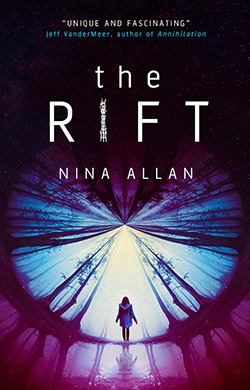
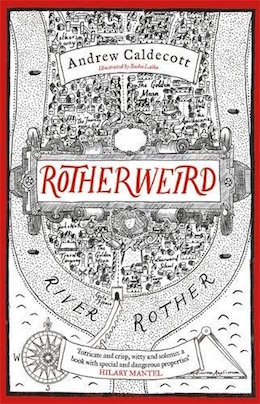
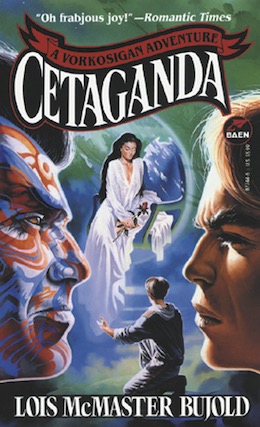
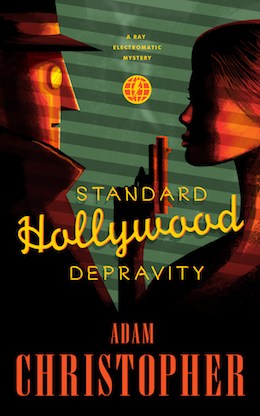
May 22, 2013 Super Bass Kai Ashante Wilson Is Gian’s love for the Summer King stronger than his hate? May 15, 2013 The Button Man and the Murder Tree Cherie Priest An all-new Wild Cards story May 14, 2013 Shall We Gather Alex Bledsoe When one world brushes another, asking the right question can be magic… May 8, 2013 Fire Above, Fire Below Garth Nix The dragon below our city has died. What is to be done?
From The Blog
May 23, 2013
Is There A New New Wave of Science Fiction, And Do We Need One Anyway?
David Barnett
May 20, 2013
The Wheel of Time Unfettered: A Non-Spoiler Review of “River of Souls”
Leigh Butler
May 20, 2013
Shall We Begin? Star Trek Into Darkness Spoiler Review
Keith DeCandido
May 19, 2013
It’s a Promise You Make. Doctor Who: "The Name of the Doctor"
Chris Lough
May 17, 2013
Supernatural’s Dean Winchester Dismantled His Own Machismo...
Emily Asher-Perrin
Showing posts tagged: Mysteries click to see more stuff tagged with Mysteries
Tue
Feb 19 2013 11:00am

Sleeps With Monsters: the James Bond of Cosy MysteriesToday I’m going to step outside the confines of the SFF genre—to break free!—and talk about television.

I have to break free from the confines of skiffy to talk about television that’s both ongoing, that I like (and thus can recommend without ten thousand caveats), and that centres on women, a woman, or non-male-identified people in general. So today, let’s break out as far as 1920s Melbourne....

Miss Fisher’s Murder Mysteries is an Australian show, based on a series of cosy detective stories by Kerry Greenwood. The first season began airing in the Antipodes early last year and in the US in the autumn, and is due to come to the UK some time this year. A second season is expected in 2013.

[Read more]

Tue
Jan 29 2013 2:00pm

“I don’t write problems,” said Royden, in rather too high a voice. “And enjoyment is the last thing I expect anyone to feel! If I’ve succeeded in making you think, I shall be satisfied.”

“A noble ideal,” commented Stephen. “But you shouldn’t say it as though you thought it unattainable. Not polite.”

Georgette Heyer’s agreement with the publishers of her mystery novels stipulated that she was to deliver a mystery/suspense novel to them once per year, a schedule she kept with admirable consistency until the outbreak of World War II. Stress over family members, in particular sorrow for a brother-in-law killed in the early years of the war, and fear for the safety of her husband, who had joined the Home Guard, made it difficult for her to write, or focus on something she found absolutely pointless under the circumstances. She procrastinated a bit with the escapist fluff The Corinthian, but she could make excuses for only so long, and eventually she returned to writing Envious Casca in slow bits and pieces. It was to be one of the grimmest yet best of her mystery novels.

[Spoilery, although again in following the dictates of Golden Age fiction, I try not to reveal the identity of the murder.]

Tue
Nov 6 2012 10:00am

Looking at the new (and old) mysteries on TV and whether they’re worth your time.

Welcome back to “Don’t Touch That Dial,” a mini-series in which I, your friendly neighborhood television addict, will break down some of the shows screaming for your attention. Previously we delved into fantasy/paranormal and horror/comics/general geekery shows, so in this very special episode we’ll tackle mysteries and procedurals, namely Castle, Dexter, and Elementary.

Be warned, where applicable these reviews contain moderate SPOILERS, nothing worse than what you’d get by checking out the show’s summary on its network site, but still, don’t come into this post expecting to keep your televisual virginity intact. Any shows in particular you’d like me to cover? Drop me a line in the comments.

[We live it a world where two Sherlock Holmes TV shows happily co-exist. Truly, it is a miracle.]

Wed
Apr 20 2011 11:03am

Graveyard Dust by Barbara HamblyLeaning on the corner of Colonel Pritchard’s ostentatious house, he could smell the sharp scent in the hot weight of the night, hear the shift in the feverish tempo of the crickets and the frogs. The dim orange glow of an oil lamp fell through the servants’ door beside him, tipping the weeds beyond the edge of the yard with fire.

Then the air changed, a cool flash of silkiness on his cheek, and he smelled blood.

—Barbara Hambly, Graveyard Dust [Bantam, 1999]

Graveyard Dust was the first of Hambly’s original novels I’d ever read. I can tell you the precise day I stumbled across it, sitting there on a narrow shelf in a tiny specialist mystery bookshop* in late afternoon. It was March 9th, 2007, and reading those lines in the wash of dusty light from the window, I knew I’d found something special.

*Murder Ink, a booksellers which has since “diminished, and gone into the west,” so to speak. Like so many other good things in this dire economy.

[Read more]

Wed
Jan 28 2009 5:47pm

With A Study in Scarlet, published in Beeton’s Christmas Annual 1887, Arthur Conan Doyle created Sherlock Holmes, arguably the most well-known fictional detective in the world. Holmes has become an icon, continually inspiring adaptations and reimaginings of his stories. Next year promises a new interpretation from director Guy Ritchie with Robert Downey Jr. as Holmes and Jude Law as Watson.

More than the spin-offs and adaptations, however, Holmes’ methods have inspired many imitators. Holmes was a keen observer, often assembling his solutions from collections of details—the type of footprints left in the mud at a crime scene, a particular type of tobacco, the smudge of ink on the inside of a finger. This focus on detail, on observation first and foremost, has been used by many popular television investigators.

[Read on for a few examples currently on television.]

Fri
Jan 2 2009 3:22pm

Photo by Jean-Marie David, Quai du polar, Lyon, 2006Donald E. Westlake died suddenly on New Year’s Eve. He was seventy five years old, he’d been married to the same woman for thirty years, he had four children, four grandchildren, and a successful writing career—he published more than a hundred novels and he was writing up until the day he died. You can’t really hope for a better way to go— and it still sucks. Death just isn’t fair, that’s all there is to it. I am not resigned.

Westlake wrote mysteries, under his own name and as Richard Stark. Some of them are funny, like the wonderful comic caper novels about Dortmunder, and some of them are hardboiled (the Stark books) and some are more akin to psychological horror, like The Hook, which literally gave me nightmares. He wrote a collection of short science fiction mysteries Tomorrow’s Crimes, and an arguably SF mystery novel, Smoke. He was amazingly versatile.

[Read more...]

Fri
Dec 12 2008 11:07am

Dorothy Sayers wrote early in the era of detective fiction and helped to establish the borders of the genre. Her Lord Peter Wimsey stories follow, and help shape a classic cosy formula, an amateur detective who provides the continuity from book to book, a small enclosed community with lots of fascinating detail, and into that community the horrible disruption of murder, turning everyone into suspects. Sayers’s genius was to write a pile of stories on this model, all very neat with elegant solutions, and then to make her cardboard hero real and write a couple of real novels in the series with heart and depth. These last two, Gaudy Night and Busman’s Honeymoon, deserve to be read after the others to be truly appreciated.

I came to Sayers very late, about ten years ago. I read Agatha Christie and Josephine Tey’s cosies as a teenager, but I found the British Sayers covers that were then current quite repellent, and also in a kind of reverse snobbery felt I didn’t much care to read about a lord solving mysteries. This idiocy deprived me of some excellent books for a long time. I eventually decided to read them after being thoroughly spoiled for Gaudy Night by Connie Willis’s To Say Nothing of the Dog. The spoiler—and I suppose I can forgive Willis for spoiling a sixty year old classic—was enticing. I asked for reading order, and Pamela Dean gave me the very wise advice that the books start with Whose Body, but the best one to start with if I wanted to know whether I liked them was the entirely stand alone Nine Tailors.

In Nine Tailors, Lord Peter gets stranded in a little fenland village and helps the village to ring an all night peal of bells on New Year’s Eve. Months later—the events of the book cover a year—a body is discovered in a grave, and not the body that’s supposed to be there. Lord Peter is called back to investigate. The book takes in snow, floods, the drainage of the fens, bell ringing, a missing necklace, bigamy, murder, a village idiot, church architecture, and in the end a very neat solution to the mystery.

[Read more...]

Mon
Oct 27 2008 3:01pm

Tony Hillerman, reporter, editor, journalism professor, and writer of the NYT bestselling Joe Leaphorn-Jim Chee mystery series, died Sunday evening in Albuquerque, New Mexico. Winner of the Edgar, Agatha, Anthony, and virtually every other writing and literary award, he made New Mexico come alive for people all over the world. His novel Skinwalkers propelled him to the top of the mystery field and remains a landmark work.

Many articles on the web will have the particulars on Tony—how he was a newspaper man, taught college, became a very prominent literary figure of our time. But none of that captures the essence of the man—who he was is far more important than what he did—and I think Tony would approve of that sentiment.

The first time we met Tony all the area writers were gathered at Winrock Center to sign their books. Management there wanted to have Tony’s name displayed in HUGE letters, and not list the rest of the authors there. What Tony did then shows you more about the man than anything I could say: He refused to have his name up unless all other names were also listed.

Tony was like everyone’s favorite uncle. He was always there for all of us. The first time we wrote about Shiprock using a Navajo lead, we were writing romances. I needed information for a segment of the book about the Tewa Indians (also from New Mexico) so I called Tony for help. He shared his own sources with me. When the book was finished, I called to thank him. And as we were talking, he asked me to send him the book. I hemmed and hawed, uncertain about it. Tony was larger than life for most of us. He pushed me and so I finally said, “Tony, it’s a romance.” There was this huge pause and finally he answered. “So what, do you think I only read Hemingway?”

Tony quoted on our work and started us on the track we follow today. Later, when Robert Redford wanted to have dinner with him to talk about optioning his work, I’d heard that he’d actually said no, and rescheduled because he had a poker date with his buddies. When I spoke to him I asked him if that was true, because I couldn’t believe it. Tony said, “Of course. I’d already made arrangements to meet friends. I couldn’t cancel for something like that. Wouldn’t you have done the same?” This time I was the one who paused. “Well, no, I wouldn’t have. And Tony, my friends would have understood! Robert Redford? They would have had me stoned if I hadn’t returned with a ton of photos!” Tony just laughed. “Well, that’s cause you’re a woman.”

That was Tony. His priorities were always on the mark. He took time for people, and helped you even when you didn’t have the guts to ask. His work as an author is what he leaves behind, but his real legacy is the way he lived his life.