June 19, 2013 Burning Girls Veronica Schanoes In America, they don't let you burn. June 18, 2013 The Stranger Anna Banks The Syrena don't trust many humans. June 12, 2013 Porn & Revolution in the Peaceable Kingdom Micaela Morrissette This is the story of a pet human and the slime mold who loves her. June 11, 2013 A Visit to the House on Terminal Hill Elizabeth Knox They have their own way of doing things, and don't take kindly to outsiders.
From The Blog
June 13, 2013
All Hail Graham of Daventry: The 30th Anniversary of King’s Quest
Brad Kane
June 12, 2013
A Field Guide To Roshar: The Ecology of The Way of Kings
Carl Engle-Laird
June 10, 2013
Advanced Readings in D&D: Robert E. Howard
Tim Callahan and Mordicai Knode
June 10, 2013
Game of Thrones Season 3, Ep. 10: “Mhysa”
Theresa DeLucci
June 10, 2013
Geek Love: Nice Days After A Red Wedding
Jacob Clifton
Showing posts tagged: Culture click to see more stuff tagged with Culture
Mon
Jun 10 2013 9:00am

designed by Jenny SlifeLast Monday the genre internet—which is to say, basically, “the internet”—seemed starkly divided into two camps: Those who’d been holding their breaths for up to twelve and a half years, and those who were still recovering. I don’t like the physical act of reading high fantasy, so I haven’t read the books. I do have a habit of devouring wikis having to do with these long epics I’ll never actually read, or the rules of roleplaying games I’ll never play, and I’d been following the story for at least ten years, but that doesn’t seem like a normal behavior.

Plenty of people have, of course, read the Song Of Ice & Fire series since A Storm Of Swords was published, and we all have geek friends that love nothing better than to either coyly tease with non-spoiler spoilers, or answer direct questions: I bet most of us probably do fall somewhere between those camps in one way or another. Either way—unspoiled, by the way, herein—it was an explosion.

[Read more.]

Tue
May 28 2013 12:00pm

Cultural Strip Mining vs Good Manners

Recently I attended my first neoPagan gathering in over a decade; while there, I picked up Staubs and Ditchwater by H. Byron Ballard (Silver Rings Press, 2012), a book on Appalachian folk magic. As I read, I ran across a statement that brought up an important issue: cultural appropriation, or as Ballard puts it, cultural strip-mining.

Ballard writes, “We tribeless white people learn dances and songs from other cultures that seem deeply spiritual to us, though we don’t know their context or deeper meanings, we just like the way they look or sound or make us feel. We think they’re cool.” (p. 12)

[Read more]

Tue
May 28 2013 10:00am

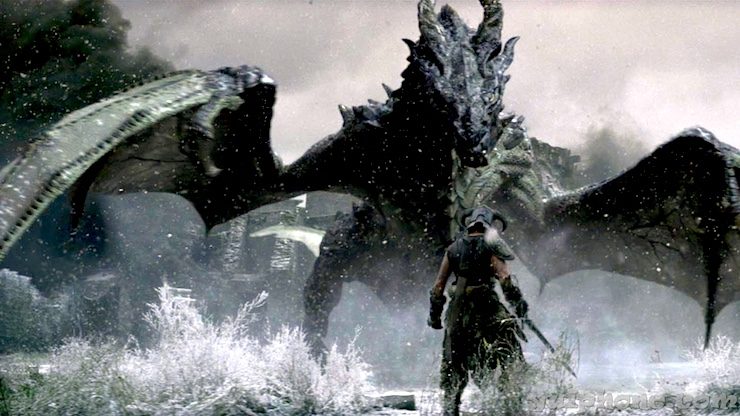
Geek Love My Big Gay Skyrim WeddingMy name is Jacob Clifton, and I am a bad gamer.

...Well, a bad role-player. Part of it is, I think, that coming into gaming in my mid-thirties means role-play has lost a lot of its appeal, since real life provides far too many opportunities for that as it is, but honestly I just can’t understand the appeal of being anyone other than myself.

What that means is that when I play a game—beyond Mass Effect, the games I’ve learned I love most are the Bethsda open-sandbox franchises, Fallout and Elder Scrolls—I play as myself. I suppose I’m missing out on part of the adventure, but I’m more interested in exploring other people’s stories than my own.

Minor spoilers, as usual—and plenty of nitpicking to be done—but not really the point.

[Read more]

Wed
May 15 2013 5:00pm

Scientific American Armor against Prejudice

A common defense made by anyone who is called out for advancing a stereotype is, “Stereotypes exist for a reason,” the implied message being that they are most often true. But what if by simply saying that, you were putting someone at a disadvantage? What if insisting on the accuracy of a stereotype was one of the very factors that perpetuated it? Scientific American’s June issue has some intriguing information in the article “Armor against Prejudice” by Ed Yong, on the perils of “stereotype threat” and the fascinating ways we can combat it to give future generations a better chance of success.

[Read more]

Mon
May 13 2013 2:00pm

Geek Love: Mass Effect

I’ve only been playing video games for about a year, because I only recently got the memo that videogames had turned into something I would enjoy. I don’t like being told what to do and I don’t see the value in things like fan fiction, usually, because I don’t get off on playing with other people’s toys. But people I trust kept telling me videogames weren’t like that anymore, so I gave it a shot, and I haven’t looked back since.

The first thing I got really obsessed with was the Mass Effect trilogy, which is basically a story about the diplomatic moves necessary to create a community in the face of Apocalypse. Over three games—hundreds of hours of playtime—you build an army, out of a complex variety of factions, races, interests and centuries of nasty political history.

The big selling point of the game—some would say, dubiously fulfilled—is that every choice you make carries weight. People you mess with in the first game might still resent you two games later. Valued allies you allow to die won’t be around when you need them, and so on. But there’s one choice, early in the game, that has led to more fights around the story than any other.

Minor spoilers to follow—and plenty of opportunities to nitpick, I’m sure—but they’re not really the point.

[Read more]

Mon
Apr 15 2013 9:00am

Geek Love: Pictures of the Floating World

“And I had to wonder... Are we controlling the cell phones, or are the cell phones controlling us?”

After Gossip Girl was over—I recapped and analyzed every episode of the show, for all six seasons—my beloved Editorial team at TWoP suggested it might be a good idea to take on the new show from that production team, The Carrie Diaries. I didn’t need to think too hard before I said no.

Part of it is that I have beef with Sex & The City—for giving scores of bright young girls the idea that my life is an audition to be someone’s Pet Gay—but honestly, the majority of it is that I don’t have a lot of patience for period pieces.

And the reason for that has to do with futurism, basically, which is what I really want to talk to you about.

[Read more]

Mon
Apr 8 2013 9:00am

Geek Love Gargoyles and Geek GirlsIn Neal Stephenson’s rightly-beloved masterpiece Snow Crash, there are a few memorable moments of scorn in the story—which I’ve always thought, sidebar, to be slyly narrated by one of the characters, in an unbreaking deadpan manipulation of the fourth wall—for what their near-future society terms “gargoyles.”

These are people who, unsatisfied with the seamlessness of human-use technology, strap video cameras and tape recorders to their bodies, in order to more fully embody surveillance culture (couture, if you like). Of all the mystifyingly accurate parts of the satire/prophecy the book contains, that one always stuck with me. I liked to imagine them, steampunky almost, uploading their experiences at baud rates, one photo and soundbite at a time.

Of course the real future—us—is a much different situation, and we’re engaged right now in a cluster storm of debates about privacy, technology, even the very basics of how to accomplish capitalism in a world where information is literally free, because the real future takes its form from continuity. It’s a rare technology that survives without fitting seamlessly into daily life, which is why the few evolutionary jumps that actually change the way we operate ourselves—the PC, the Smartphone—do such big things to our economy.

Generally, when we say “early adopter” we mean physical technology, hardware. But there’s a rumbling undercurrent over the past few years that I think applies a new meaning to the word, and it has to do with the acquisition of IP. And it has to do also with being a dick.

[Read more]

Mon
Apr 8 2013 9:00am

Geek Love nerd culture column by Jacob Clifton

I’ve been writing about television for the site Television Without Pity for about ten years now, and while I love having the opportunity to think more intensely and talk things out when it comes to the shows and stories I love most, that part of the job pales in comparison to interacting with the fans of the shows and seeing the communities they build around those shared interests.

It’s practically impossible—for me, at least—to think about shows (especially in the genre) without immediately attaching a kind of parallel narrative about the fandom of the show, its connections with other fandoms and geek interests, and what the things we love say about us as people. Not really in the same way as scholarly “media studies” work, or even the snarky metacommentary and inter-fandom sniping that goes on (no matter how often it’s hilariously true), but in the very personal and heartfelt ways fandom appreciation creatively expresses itself.

Being a TV recapper for so long, I’ve sometimes felt stuck in that blurry area between “consumer” and “producer” of content. I mean, I write stuff that people find enjoyable for some reason, but in my role as recapper it’s not really my toys I’m playing with.

[I don’t think I’m alone in that blurry place.]

Tue
Jan 29 2013 1:00pm

Fiction Into Reality: Why Nerds Borrow From What We Love

Geeks of all stripes are in on a secret: being a fan is fun. And no matter where your obsessions lie, we share a whole lot in common; we read, we watch, we talk online, we theorize during downtime, we cosplay and meet at conventions. We can quote entire films back and forth, we read each other’s fanfics, we collect prop replicas... (Or is that last one just a me thing?)

And we also assimilate. Not in a creepy Borg kind of way, but it’s an interesting phenomenon all the same.

[Why, exactly, did you start wearing bow ties?]

Mon
Dec 10 2012 11:00am

Your favorite place is in ruins, and a really mean guy is behind it all. He’s so bad, he’s like nothing you’ve ever seen before. He’s the definition of fear, and other things which are very…unpleasant. Nothing will be the same ever again after this. Your favorite person or persons in the world will be pushed to the limit in a new adventure that will shatter their world, and yours. If you thought things couldn’t get harder, grittier, or contain more monotone music, you’d be wrong. The next installment in your favorite movie series is here, and it’s similarity to other movies is striking, but not unsurprising.

Sound familiar? Have you seen twenty versions of this trailer?

Calling the majority of big franchise movies formulaic would be almost a compliment at this point, because it would denote some sort of basic originality. But with the release of the Star Trek Into Darkness trailer, I’m worried that all of these popular franchise films have become not just formulaic, but straight-up copycats of one another.

[Read more]

Wed
Oct 24 2012 11:00am

You Are Not Anonymous: On Internet Privacy and the War On Trolls

The web has been buzzing over the past several months due to the unmasking of some well-known internet trolls. A large portion of the online community has thrown up their hands in a collective sigh of relief, but a sizable number are enraged – by bringing the names of these people to light, real life identities have been comprised and people’s lives have been altered for the worse. And in the name of privacy, people have picked up their virtual boxing gloves and started winding up the good old one-two punch.

Yet it seems that this anger stems from the internet’s greatest fallacy, one the internet itself has long encouraged: the notion that the world wide web is somehow private in the first place.

[Keep away from those chat rooms…]

Mon
Oct 8 2012 3:00pm

Babylon 5 and the beginning of 21st century fandom

Fan chatter about TV shows like Doctor Who, Game of Thrones, Breaking Bad, Downton Abbey, and Mad Men often revolves around the various spoiler-filled turns in long-game plot arcs. But the word “spoiler”—at least in the way we use it in relation to television—is relatively new. Though it’s possible fans of a bygone era of soap operas were afraid of other fans ruining the outcome of the previous day’s episode, the vehemence of these protests were probably not as serious as they are now. Notably, fans of 20th century soap operas didn’t have the internet.

But way back at the end of the last century, one of the first sci-fi fandoms did have the internet, complete with online spoilers! That fandom was centered around Babylon 5, and though we don’t talk much about Babylon 5 now, the narrative structure of the show, in tandem with internet discussion, essentially created the model for TV fandom today.

[Read more]

Mon
Oct 8 2012 10:00am

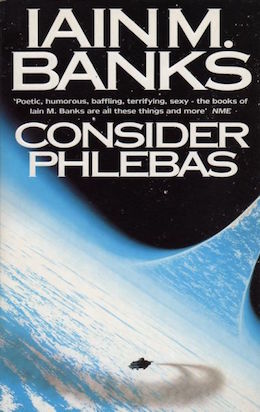
Has it really been 25 years since Consider Phlebas, the first novel in Iain M. Banks’ Culture series, came out? My goodness. Does this make anyone else feel old at all? Not to worry though: a new novel in this stunning series is always cause for celebration, and in this case doubly so, given that this book is the tenth in the series according to Orbit (including the short story collection The State of the Art, which contains some Culture-related pieces) and marks a quarter century of Culture novels.

Fans have probably already ordered or pre-ordered The Hydrogen Sonata, and for them this review will just be preaching to the choir. Newcomers may be busy trying to decide if this is the time to jump in—and then get to navigate the various theories on What’s the Best Place to Start, given that the internal chronology of the series doesn’t match the publication order and the only aspect most of these novels overtly share is their setting: the benevolent post-scarcity interstellar empire known as the Culture, in which the human inhabitants live in utopian, semi-anarchic bliss managed by immensely powerful artificial intelligences known as Minds. (Number one on my personal list of fictional universes I’d like to live in, by the way.) 

[Read more]

Wed
Aug 29 2012 4:00pm

Gotta love when the internet gets together to do something great: this week's Read Comics in Public Day has been co-opted into Women Read Comics in Public Day. (Check out this Tumblr for some great pictures.) But the fact is, women have always read comics, in public or otherwise. For the best example, you need only look above—that would be Audrey Hepburn reading Captain America.

Pause for a moment and bask in the coolness of that.

[Read more and see more pictures!]

Thu
Aug 16 2012 9:00am

If the Dalek’s catch phrase wasn’t “Exterminate!” what would it be? What if they said “laser-i-nate!” instead? Or maybe “destroy-a-zap!”

Your offsite links might contain new catch phrases and should all be read in the screaming Dalek voice. (REAAD! REAAAD!)

Highlights include:

  1. How certain phrases get misremembered by the culture.
  2. Hemingway was a terrible spy.
  3. Jeff VanderMeer speaks the truth about self-publishing.

[Read on]

Fri
Jul 27 2012 10:00am

Let’s start this article off right: I’m not here to make an attack on men, male writers, or male nerds. I’m not here to present a soap-box argument about the ills of the world and the dangerous political atmosphere that faces women today. I’m not even here to critique or attack works of fiction, be they literature, film, or video games that have portrayed women in unfortunate ways in the history of geek culture. This article is not about any of those things, and though there is a forum for all of those discussions, this isn’t it. Instead, this article is going to discuss something near and dear to my heart. We’re going to talk about the dangers of geek culture and trolling.

[Trolling starts like this...]

Thu
Jul 26 2012 3:00pm

In a recent article on Forbes.com entitled 7 Ways You’re Hurting Your Daughter’s Future, the author cited the indoctrination of young girls into the ’princess cult’ as a danger to the minds of future women. The article states that while real life princesses are often accomplished and well-educated, little girls are often taught that should she attract her prince through her looks or the proper application of a well-placed song and eyelash bat, all of her dreams will come true. It’s hard to miss what this article is pointing towards. The cult of princess is on every toy store in America, presented live in pink boxes everywhere for little girls to embrace. The Disney Princesses are a collection of characters meant to give little girls hours of play-time enjoyment. Yet the message behind many of the Disney princesses does seem to be the same: you may be resourceful, sweet, and kind, but in the end it was all for the sake of a happily ever after with your prince charming.

[However...]

Tue
Jul 10 2012 11:00am

The Four Questions Everyone Asks at Conventions

With San Diego Comic Con starting this week, I thought it would be a good time to review the four questions that get asked at every question and answer event ever.

And while there are no bad questions, and yes, sometimes someone asks a question that falls outside these categories (which were thoroughly researched by me, of course), on the whole, most questions fall into these four types and everyone, fan and creator alike, should be prepared for them.

[Read more]

Mon
Jul 2 2012 3:30pm

“The Disney Villains Designer Collection is a unique, stylized and fashion-forward take on these iconic characters.” - John Balen, Disney Store director.

By “stylized,” you mean “unrecognizable,” right Disney?

I’m going to attempt to reign in my temper here because it’s hard. I grew up watching The Little Mermaid, and while I loved Ariel for her red hair and Sebastian for his near-death experience at the hands of an overzealous French chef, I also knew every musical note of that movie. Singing “Poor Unfortunate Souls” in front of my family’s television with all the camp I could muster at the tender age of four was a common scene.

I loved Ursula. But it doesn’t look like Disney does anymore.

[This one longing to be thinner, that one wants to get the girl…]

Tue
Jun 26 2012 6:00pm

One question that came out of John Scalzi’s apt blog post “Straight, White, Male: The Easiest Difficulty Level There Is” is this one:

“How might we understand the idea of class through video games?”

That is, if using the analogy of an RPG video game can help white male nerds understand institutionalized racism and white privilege, it’s also possible that video games might help nerds of every gender and race understand the concept of class structure and class struggle.

[Insert Quarter...]